
 English
 Français
 Deutsch
 Suomi
Suomi Español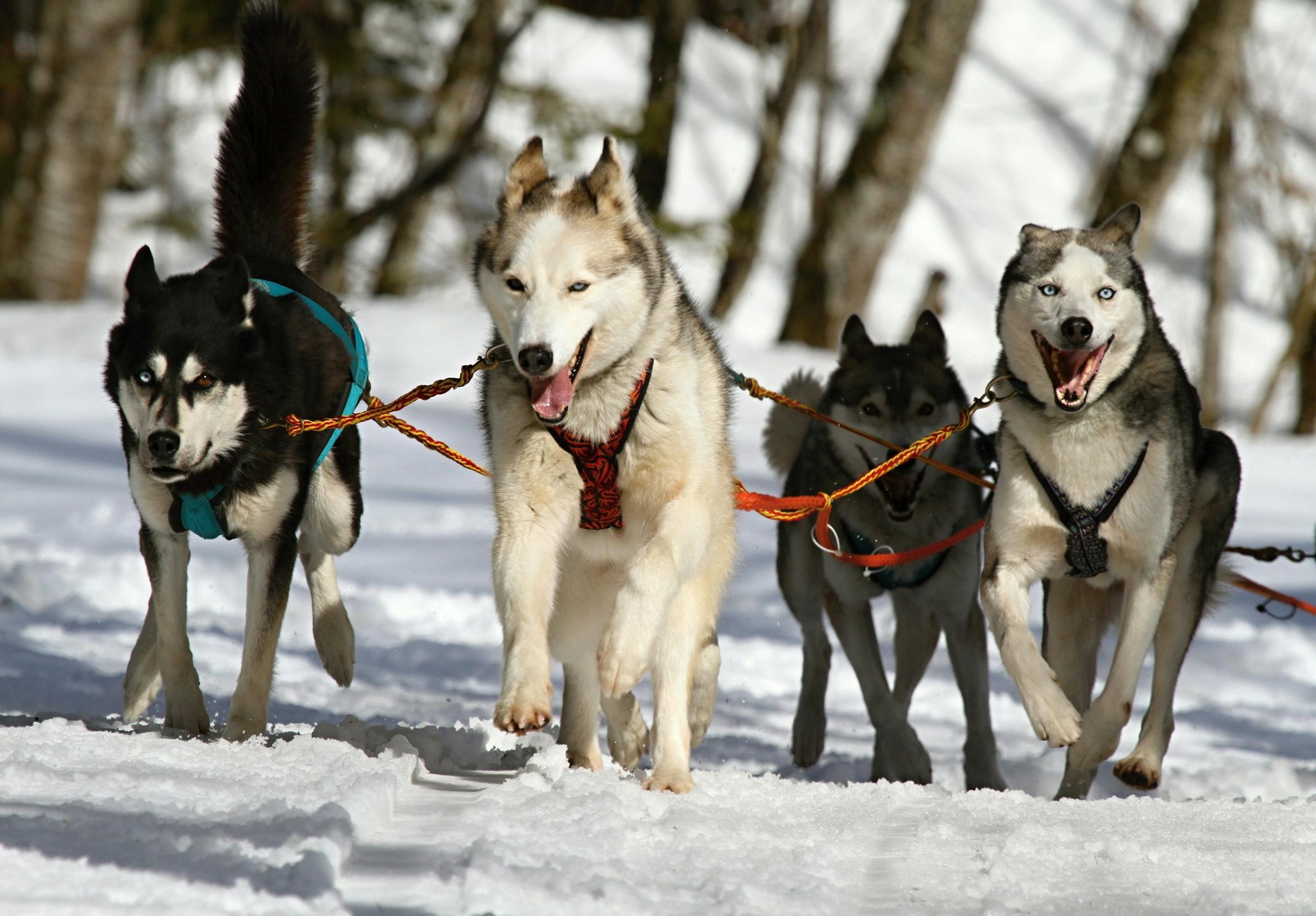
This section is less about husky safaris and more about the behind-the-scenes work of running a farm in Northern Scandinavia and preparing huskies to become sled-dogs. Anyone who has visited will love the gallery, which features each of our dogs individually with a little about their character. And if you are interested in getting your own husky, check out our 'adopt a husky' page about the cuddly friends ready to retire to a new warm bed.
- More than 200 dogs on the farm
- Independently rated MUSH with P.R.I.D.E. 'Certification Plus'
- One of the very few Scandinavian kennels with a 'no-kill' policy
Husky history and exploration
The history of sled dogs and their central role in the early years of exploration fascinates us too. In our 'More about Huskies' section we look at dogs as animals and at the breeds most commonly used as sled dogs. We hope you enjoy this background reading as much as we enjoyed putting it together!
Adopt or Sponsor a Husky
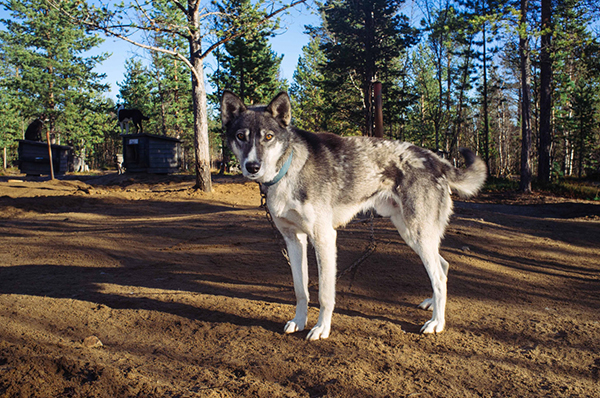
Adoption is when someone takes an old or injured dog from us and looks after them in their own home. Sponsorship is when someone supports the cost of keeping a dog on the farm - whether a retired or sick dog that can't earn its keep but wouldn't enjoy a new home, or a dog that loves running and living here and has become a favourite of a visitor or guide. Sponsorship is available at various levels, so anyone who wants to contribute towards a dog's upkeep or care can do so. Our partners tend to be companies that provide ongoing support towards the major costs of running the farm.
- Adoption: take an old or injured dog into your own home
- Sponsorship: support a dog's upkeep in situ at the farm, available at various levels
- Sponsorship suits most overseas supporters as it avoids complex export paperwork
Sponsorship vs adoption
For most people - particularly those living outside Finland - sponsorship is more viable than adoption, since the inoculations and paperwork needed to send a dog overseas are complicated, expensive and time-consuming. That said, if you are keen to adopt a husky, please don't be put off.
Dogs in need of sponsorship
Dogs in real need of sponsorship tend to be old or injured dogs that can no longer earn their keep and weren't born here or well socialised when young. Most wouldn't enjoy a new home - they are either too shy to live indoors with humans, or very much outdoor pack animals - so they need to be cared for through sickness and retirement in situ at the farm.
Dogs put up for adoption
Dogs put up for adoption are generally happy, well socialised dogs that respond well to living indoors and being loved by people. They will be more or less house trained and respond to basic obedience commands. Some are ready for graceful retirement and need a tranquil home. Many kennels 'get rid of' their old dogs as soon as they start to slow down, which can be as early as age 6; we let dogs run as long as they want to, so we still have some running at age 11 and 12 - though if the perfect home came along, we would happily retire a dog earlier. Other, younger dogs may have an injury that rules out working life but would still make a totally loving dog in a normal household. Still others may not suit the high arctic but would be happy to skijor and mush with you for fun.
Ethical Dog Care
We asked one of our experienced guides, who has worked on a number of Scandinavian farms, for her honest thoughts on our approach to dog welfare. Good dog care, she explains, is a round-the-clock job. Where many farms in summer focus only on feeding and cleaning, our dogs are checked for heat three times a week and given a thorough medical check weekly, all year round.
- Heat checks 3x weekly, thorough medical check weekly, year-round
- Monthly nail and dental care for every dog
- Individual, season-specific training programmes
- Daily affection, grooming and massage for senior dogs
Proactive, not reactive
Regular, thorough checks let us catch lumps and bumps early, keep the pack free of fleas and mites, and watch for eye conditions such as Panus, which one of our rescued dogs needs daily treatment to manage. We believe good dog care is proactive rather than reactive, whatever the weather or the mosquitos.
Head to paw
Bellies and ears are prone to fly bites in summer, and nipples and testicles to frostbite in winter, so vulnerable dogs are checked extra often and brought indoors when needed. Feet and nails get a manicure at least monthly, teeth get a dental session at least monthly, and we even invest in anti-mosquito magnets for both dogs and guides.
Time, training and affection
Every dog follows a year-round training programme tailored to its stage, motivation and potential. Beyond that, we simply spend time with them, cuddling, grooming and playing in our running fences. Fluffier dogs are groomed twice a week to prevent matting, and our oldies get regular massages to keep their joints supple, especially in winter.
Lost and Found Strays in Enontekio
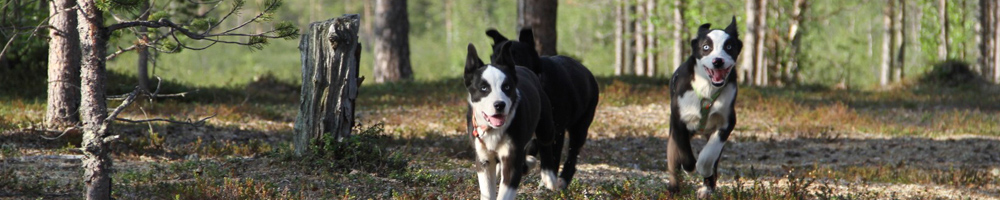
Hetta Huskies became the stray dog centre for Enontekio in the spring of 2014. Cats and other small animals are sheltered by Kati Peltovuoma (Tel. 040 227 477, Ounastie 3187, Peltovuoma) when waiting for their owners to find them.
- Stray dog centre for Enontekio since spring 2014
- 24/7 contact line: 050 577 2762
- Found-dog Facebook page: facebook.com/enontekiostrays
Found dogs
Found a dog and need to hand him over for his owners to find? Call 050 577 2762. Please leave a text if we don't answer immediately, as we may be in a meeting or on a safari, and we will call you back as soon as possible. If you have a picture of the dog, send it to info (at) hettahuskies.com - we may immediately recognise 'frequent offenders' (dogs allowed to wander and often picked up by well-wishers)!
In your message, please tell us: your name; your phone number; your location; what kind of dog you have found (if you know); and a description (gender, coat and eye colour, approximate size and age, general condition).
If you can get the pet to us, great. If you have no time or transport, we will come to collect it as soon as we can. We then technically have 15 days to find the owner or a new home before the animal should be put down, but we always try our utmost to keep it until a new home is found.
Missing dogs
Please let us know if your pet is missing by calling 050 577 2762 and ideally send an email with a picture through to us on info (at) hettahuskies.com. Please include: what pet is missing (breed / appearance, colour, sex, size, whether marked for identification, colour of collar, microchip number); when and where the pet was lost from; a picture / pictures; and the owner's contact information (name, phone number, email address). Please do let us know if your pet has been found.
Picking up your dog
When you pick up your dog, you will be charged for its stay. Standard daily rates (as per a hotel dog) apply, plus any costs incurred in its rescue and care - for example, the mileage and time cost if we had to drive to collect it. We assess the dog on arrival and decide whether it can go straight into a holding pen or needs immediate care first: washing, grooming, cutting matted hair, trimming overlong nails, cleaning and medicating wounds, or a trip to the vet. We carry out whatever treatment we deem necessary and charge you accordingly.
Contact
Hetta Huskies, Hetantie 211, Enontekio 99400. Tel: 050 577 2762. Email: info (at) hettahuskies.com. www.hettahuskies.com / https://www.facebook.com/enontekiostrays
- Phone
- 050 577 2762
- info (at) hettahuskies.com
- Address
- Hetantie 211, Enontekio 99400
More about Huskies
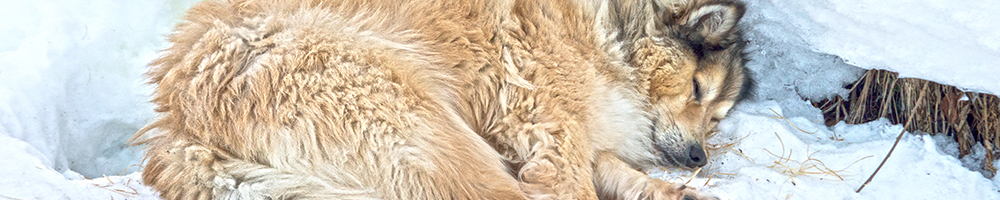
This section of our website is here primarily for 'husky buffs', since we know that many people love the breed and are interested in the wider history of sled dogs. Below we look at dogs as animals and at the breeds most commonly used as sled dogs. For us there is also a tie-in to CAPE Lapland - the more extreme polar exploration arm of our business - and our own history of exploration.
- Dogs were domesticated around 33,000 years ago
- Siberian and Alaskan huskies are the most common tourism sled dogs in Lapland
- Our farm also keeps Malamutes, Nenet-Laika-Taimyr crosses and Taimyrs
Dogs as animals
Before looking at huskies in detail, it is worth considering dogs as animals. Dogs were domesticated 33,000 years ago, and their behaviour and physiology can no longer be compared to those of wolves. One difference in social hierarchy is that within a group of dogs, several male and female pairs can procreate.
Semi-feral dogs spend their time acquiring food, resting and tending to social relationships within the pack. Food-related behaviour - searching, hunting and tearing food to pieces - is a significant need for any dog, and the breed affects how pronounced such behavioural needs are.
Dogs have sensitive hearing, good vision and a wider field of vision than humans, while their primary tool of communication is smell. They adapt well to prevailing circumstances, though individuals differ. They are intelligent animals that need activation to maintain their mental and physical well-being, and much of their happiness comes from species-typical activities: exercising in varying surroundings, exploring by sniffing and running free. (Telkanranta Helena 2015, Hyvinvoiva koira, 9.)
Breeds used as sled dogs
Several breeds are well-suited to acting as sled dogs. Siberian huskies and Alaskan huskies are the breeds most commonly used as sled dogs in the tourism industry in Lapland. However on our farm, we also have Malamutes, Nenet-Laika-Taimyr crosses and Taimyrs. Another source of information about dogs in general that we have found interesting is http://www.doggenetics.co.uk/. Enjoy.
Our Dogs
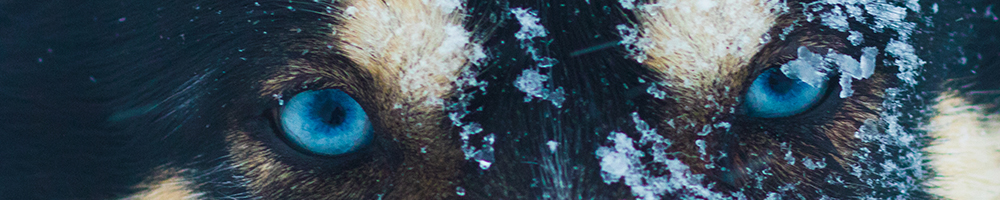
We pride ourselves on our dogs. Numerous dog-mushing experts have visited and called ours one of the nicest farms they have seen, with extremely well cared-for dogs and systems carefully thought out for the safety and wellbeing of dogs, staff and clients alike. Even our local vet, who is responsible for farms ranging from 40 to 400 dogs, always says it is a pleasure to come to ours. This is something we do not take lightly.
- More than 200 dogs on the farm
- Mostly Alaskan huskies, plus Siberian huskies, Taimyrs and Nenet Laika crosses
- Fluffier Siberians run the multiday safaris; Alaskans run the day tours
A wide variety of sled dogs
At present, we have more than 200 dogs on the farm. Most of our dogs are Alaskan huskies, although we also have some Siberian huskies - the breed that most people envisage when they think of huskies - as well as two primitive Siberian breeds: Taimyrs and Nenet Laika crosses.
In other words we have a very wide variety of sled dogs. The fluffier ones (eg Siberians, as in the header image) tend to run the multiday safaris, whereas the typical Alaskan huskies tend to run the day-length tours and come home at night to recuperate in their well-insulated kennels. Of course if the temperatures are said to be 'high' for a while, we also try to ensure that our best Alaskans get the fun of running the multidays too.
High standards and proud guides
While we work within an EU project to raise general safety and dog-care standards in Northern Europe, we continue to operate to our own exacting standards of product quality and dog care. Our guides are expected to know the individual character of every dog, to train them (and themselves) to a high standard and to take pride in the results. Used to high demands in everything they do, they naturally listen well and 'work one step ahead' in meeting client expectations too. We are confident your experience will be one of the safest, most responsible and most pleasurable husky-mushing experiences possible in Northern Europe - and we hope you fall in love with our dogs too!
- Number of dogs
- 200+
- Main breeds
- Alaskan & Siberian huskies, Taimyrs, Nenet Laika crosses
Our Farm
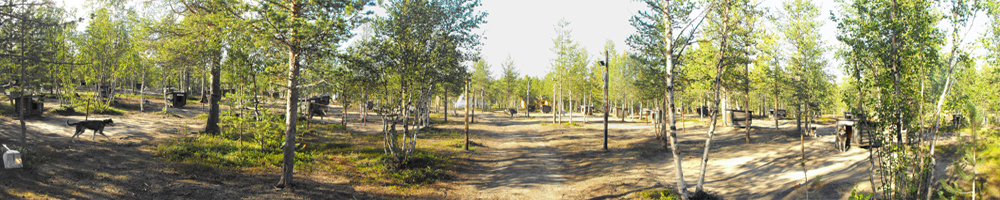
Our farm is situated in the far north of Finland, high in the Arctic Circle, in one of the last great wilderness areas in Europe, on the boundary of the northern border of the Pallas-Yllastunturi National Park (Finland's third largest national park).
- On the northern boundary of Pallas-Yllastunturi National Park, Finland's third largest
- MUSH with P.R.I.D.E. 'Certification Plus' - their highest rating
- 'No-kill' policy for retirees and non-running dogs
A labour of high standards
Maintaining a farm to high standards is very labour-intensive. As owners, we believe we have a huge responsibility to provide a safe, clean, positive and healthy environment for all our huskies and to manage them humanely. This attitude runs through every aspect of our company and is part of what makes us stand out.
We try to draw attention to the care of our sled dogs - what they eat, where they live and what they sleep in - so that clients learn to factor it in when choosing a sleddog farm and mushing experience. We believe it should matter as much as the price of the tour (and our prices are at the very reasonable end of the scale), yet much of the industry gives it little importance. We are told time and again that our farm stands out from most others in this respect.
Certification Plus
MUSH with P.R.I.D.E. is currently the only international industry standard, so we had our farm assessed by a vet against its recommended kennel standards. We were not surprised to find we not only passed but exceeded them in many ways, gaining their highest possible rating - Certification Plus: a symbol of excellence reflecting the emphasis we put on the care of our dogs.
Records and a no-kill policy
Our written dog files - covering everything from behaviour to vaccination and medical records, running distances and basic obedience - are pretty much unsurpassed and a source of real pride. So too is the fact that ours is one of the very few kennels in Scandinavia with a 'no-kill' policy for retirees and non-running dogs, so every dog here can live out its days enjoying a hard-earned rest. (For four years, Transun UK's sleddog farm Valimaa, in Kultima c. 40km from Hetta, was also under our management, and during those years their dogs benefitted from our no-kill policy and high welfare standards too.)
- Location
- Far north of Finland, edge of Pallas-Yllastunturi National Park
- Certification
- MUSH with P.R.I.D.E. Certification Plus
Respect not Neglect
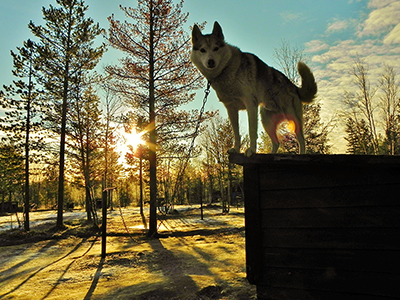
One way Hetta Huskies stands head and shoulders above most kennels is the level of care given to the dogs. We added this section because some clients assume all Scandinavian kennels care for their dogs to a similar level - sadly, that is not the case. Most kennels are clever enough to say they care for their dogs in their marketing, but dressing up the facts does not make them true.
- GOLD, 2015 World Responsible Tourism Awards - Best Animal Welfare Initiative
- 'No-cull' policy - one of only five or six farms known to follow it
- Weekly dog checks and weight monitoring; detailed medical records per dog
- Sled dogs burn 1000-7000 calories per day
Why it matters
If this matters to you and you are choosing between companies, you will need to dig a little deeper to find the reality of how the animals are cared for. And even if it is not a deal breaker, it is worth knowing that companies with a real ethical commitment to their dogs tend to be the same ones with good reputations for looking after their human clients! In 2015 our work to raise standards in the sleddog industry earned us a GOLD in the World Responsible Tourism Awards for the Best Animal Welfare Initiative.
How will I know if the farm looks after the dogs well?
Check the images and information in their marketing materials, and see how open they are about their standards when questioned - or whether they are evasive. Reputable kennels can offer detailed, transparent information about the care of their dogs. Most good farms post plenty of images of their farm and kennels, not just the standard pictures of people and children cuddling dogs, because they are proud of how well maintained and clean it is. If a farm is unwilling to be fully transparent about animal care, there is likely a problem.
Ask some more questions
Ask how many people look after the dogs in both summer and winter, and how experienced they are, since this reveals how well the manager, guides and farmhands actually know the dogs. A core group who intimately know, love and provide continuity of care for the dogs is critical to their welfare and safety. Most farms with c. 100 dogs have only a couple of people caring for them in summer, and some with up to 600 dogs still have only three or four. We have guides who return year after year, forming the backbone of our team alongside trainees who stay with us for a minimum of three months.
Industry standards
Although most Scandinavian kennels get annual vet visits, the standards they can measure against are so minimal that the visit is almost a token gesture, and the only internationally recognised standard - Mush with Pride - asks fairly little. The one region to do serious work here is British Columbia, Canada, which around 2012 introduced both a Sled Dog Code of Practice and a Sled Dog Standards of Care Regulation under the Prevention of Cruelty to Animals Act. Nothing like this exists in Scandinavia, so kennels can get away with doing 'not very much' for their dogs.
End of life plan
On most farms, dogs are put down as soon as their useful life is over. Hetta Huskies - along with about five or six other farms we know of - has a no-cull policy. (Farms can legally shoot their own dogs so long as the person with the gun is capable of doing so.) We keep the puppies we breed rather than treating them as a revenue generator, because they are a valuable part of our family. Our old dogs have large running fences to wander in together, and when they near the end of their time they are brought into the house for some comfy months on the sofa and beds. Our sleddogs are pretty lucky to be on our farm.
Health monitoring and feeding
Few farms do regular checks like we do; most are simply reactive. Area vets call us the 'lump and bump farm', amused by the size of the lumps we find in our weekly dog checks. We keep detailed records of everything from medicine use to full medical histories, vaccination and deworming schedules. Each dog's weight is checked weekly and portions adjusted for the kilometres run and the ambient temperature. Sled dogs burn anywhere from 1000 to 7000 calories a day, sometimes more, so each has a feeding plan specific to its needs. Touring sled dogs must be very well trained, muscularly fit and of sufficient weight to keep them and you safe on the trails - fit, not skinny.
- Award
- GOLD, 2015 World Responsible Tourism Awards (Best Animal Welfare Initiative)
- Policy
- No-cull / no-kill