English
 Français
 Deutsch
 Suomi
Suomi Español
Our breeding programme is strict: we breed only the number of dogs we need. We aim to breed our females in late summer / early autumn, so the pups can move outside while it is still warm and the kennel is relatively quiet. It also gives us the maximum time for their training and development, and means they are big and strong enough to acclimatise before the winter temperatures arrive.
- Litters timed for late summer / early autumn so pups acclimatise before winter
- Females first bred at around three years, max 2 litters per dog with a year between
- Pups born indoors on a heated floor and kept inside until at least 4-5 weeks old
- Early stress tests and handling from around 3 weeks build confident, friendly adults
- Puppy food up to 5 times a day, dropping to 3 at five months and 2 at seven months
Timing the litters
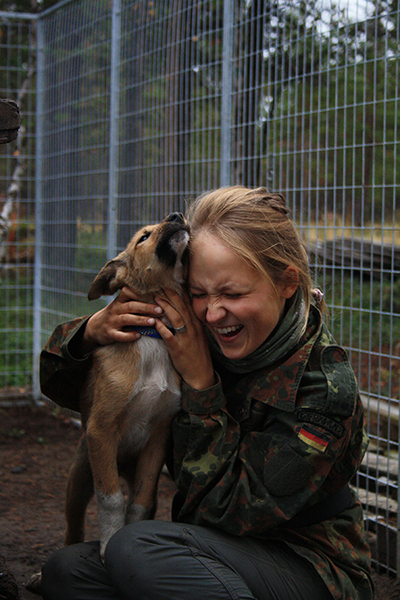
By the time clients arrive, the pups are the perfect age to benefit from playing with them - though for clients at the tail end of the season, we often notice the pups have started to walk them rather than the other way around! This timetable brings maximum benefit to pups, guides and clients, and leaves us with pups who, by the end of their first winter, are open, friendly adults keen to meet new people and new experiences head on.
Females are first bred at around three years, often slightly later, and we take a maximum of 2 litters from one mom in her lifetime, with at least a year between each pregnancy.
Birth and the first weeks
As the dam approaches her time, she is moved indoors so we can't miss the signs of the imminent birth. The dogs give birth on our tiled, underfloor-heated bathroom floor and stay inside on a soft dog bed under regularly changed bedding until the pups are at least 4 or 5 weeks old.
We monitor them closely in their first weeks and weigh them regularly to confirm they are gaining weight and developing normally. We also start tiny stress tests around three weeks of age, so that alongside being cuddled when handled, they get used to various stimuli - being put on their backs, having their paws and nails looked at, and so on.
Building confidence outdoors
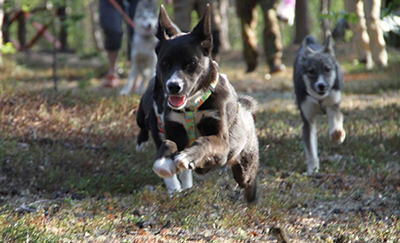
By four to five weeks old they are used to being handled, their eyesight is largely developed and they are starting to take supplemental food, so it is easy to initiate them into puppy runs - running free and returning for food treats to a 'tsh tsh tsh' sound (which we use every time we feed).
These free runs and walks help the youngsters build muscle and confidence and learn the sounds and smells of the great outdoors. As they grow more confident and start to walk and play with each other, we introduce toys to develop normal social and playful behaviour, then add other stimuli like bicycles and quad bikes.
Acclimatising and starting training
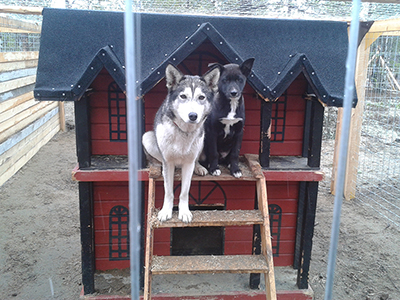
We get the pups used to an outside cage by using it for play sessions in weeks five and six and feeding them in it at least once a day. They then acclimatise gradually, living in the cage area by the house during the day before moving outside permanently into our puppy Hilton, or our roofed and floored cages near the house, at the start of a week of good weather.
Once in the kindergarten, they are fed individually rather than around a large tray. They are introduced to collars, put on little chains and asked to sit before being given their food - the start of their training. Once a day they walk loose behind us through the forest, returning for food to the sound we make every time we feed.