
 English
 Français
 Deutsch
 Suomi
Suomi Español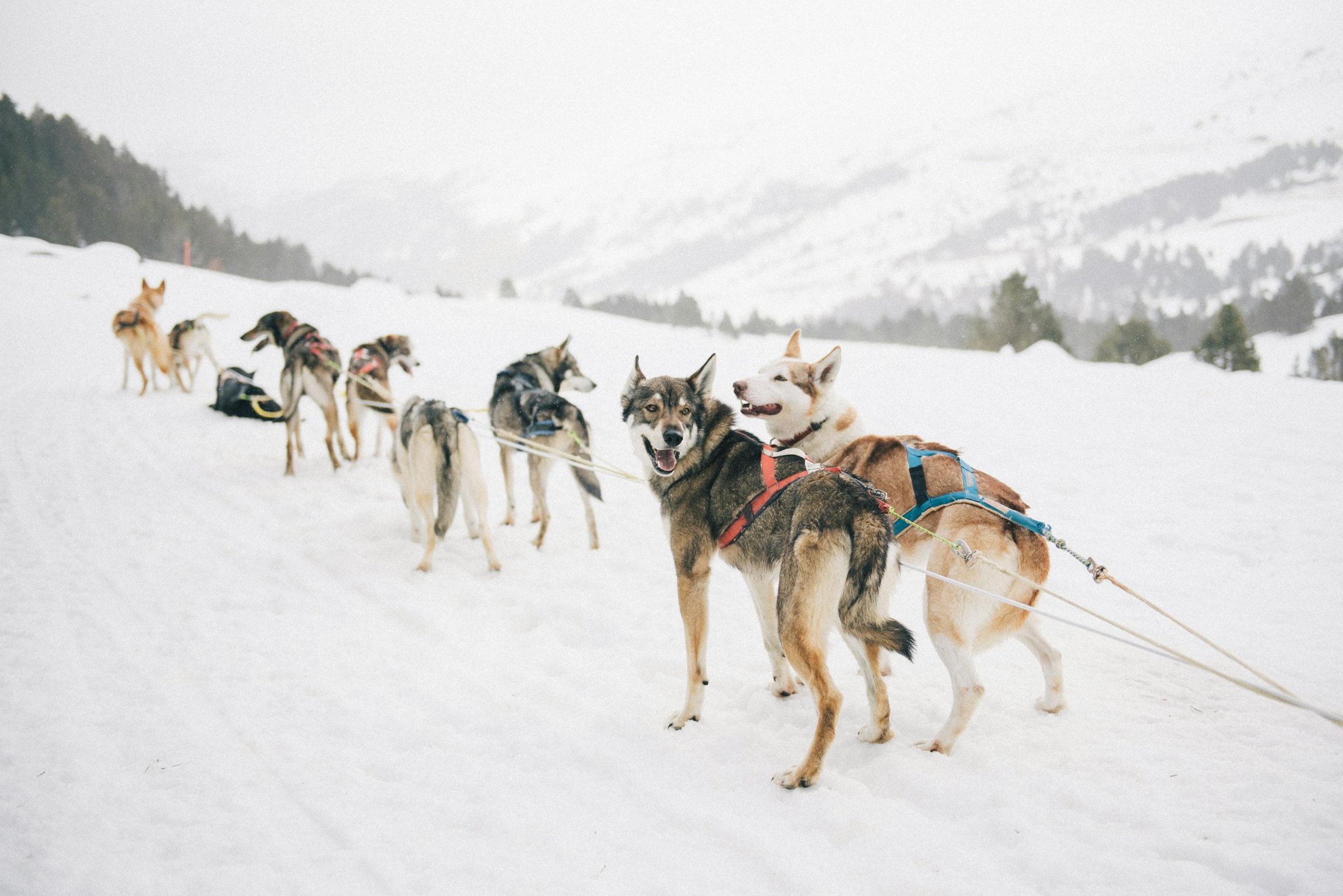
For most husky farms the dogs are first and foremost a business, so — as with any farm animal — it makes financial sense to 'retire' older, lazier or troublesome dogs at the vets. For us, our dogs are extended family. At least five — sometimes as many as 25 — live indoors with us and sleep on or around our bed each night, and another five rotate through the guide house. Along the way they get house trained, and we learn which of them would enjoy life more as a pet than as a working dog.
- We never put down a dog that is healthy and happy
- Up to 25 dogs live indoors with the family
- Adoption: a dog moves to a new home; Sponsorship: you fund a dog's care in-situ at the farm
- Sponsorship available at a range of levels to suit any budget
Philosophy of Care
We have to make money from the farm or we couldn't keep looking after the dogs — that is part of our commitment to sustainability. But we don't believe the old dogs need to be put to sleep when they retire from running for the farm to stay viable.
We have decided we will not put down any dog that is healthy and happy. So we have older dogs that don't run, an epileptic dog, a dog with a heart condition and others, all happily hanging out at the farm, walked in summer and playing in the running fence. We also run our lazier dogs as a '7th' dog when a team that day only has 6, just to keep their fitness up. It is an unusual policy among kennels, but it doesn't seem right to put a dog down simply for not being fast or good enough to work when it still has a good quality of life.
Our adoption and sponsorship schemes are part of this commitment to giving the dogs the best possible lives in our care. We appreciate your interest in them.
Adopt Me Please!
For us, the most important part of an adoption is finding the right dog for the right person, but we very much hope people first consider our oldies, or those who would be put down on other farms for medical reasons. These dogs would make strong companion pets and, we believe, have a better life retired to a sofa. Every dog we consider suitable for adoption has spent time indoors and is completely or nearly 100% house trained, and all are open and friendly towards people except the rescued dogs in the 'shy' section.
- Dogs listed in priority adoption order
- Most are fully or nearly house trained
- 'Adoption-ready' app available via QR code
- Easy for Scandinavian homes; possible but more involved for overseas
How it works
Click a dog's name to find out more about them. Within each category the dogs are listed in priority adoption order, and we really do have a 'top priority' list we are trying to home first. Alternatively, scan our QR code for the 'adoption-ready' app, which gives much more information about the dogs. Please send all adoption enquiries by email.
Ready for a sofa
The dogs listed here have worked hard all of their lives and deserve a bit more constant pampering than we can give them in their retirement. Profiled dogs include Bran (born 31 Oct 2010), who ran in lead during his first seasons and was adopted in August 2020; Georgie (born 21 Jun 2019), who came to us as a rescue from Helsinki, originally an Estonian pup; and Anton (born 1 May 2012), the only purebred Siberian Husky at Hetta Huskies.
Practical aspects of adoption
It is pretty easy for anyone living in Scandinavia to adopt one of our dogs. If you want a certain type of dog (one that can run with you, or one that is good with kids), please get in touch — we have other suitable dogs beyond those shown here. For those overseas the inoculations and paperwork are complicated, expensive and time-consuming, but not impossible: we have dogs who have moved as far as Colorado and New York, plus many who have travelled to the UK or Central Europe.
Adoption Questionnaire
If you are interested in adopting one of our dogs, please take time to read through the following questions and think about your answers. They help us get to know you, and help you picture what life would be like for you and your new dog at home. Our dogs' health and well-being is our number one priority, so we hope you understand that we want that to continue in their new life.
- Downloadable questionnaire to complete and return
- Most huskies cannot be walked off the lead
- Dogs can live to 15 — adoption is a long-term commitment
- Many dogs bond with just 2 or 3 people and need patience
Before you decide
Battersea Dog's Home in the UK has a great factsheet to help you and your family think through the issues involved in adopting a new dog. As Battersea note, giving a home to a rescue animal is one of the most rewarding things a person can do — but it is important you feel ready for the commitment of taking on another life that will be totally dependent on you. If you are hoping to adopt one of the dogs, please download a Word copy of the questions, complete it and return it to us.
Questions to challenge yourself with
What are your reasons for wanting a dog, and have you owned a dog before? Who are you adopting this dog for — and do they understand the commitment? What do you know about the husky breed; have you researched how they really behave versus how films portray them? Are all family members in agreement? Do you have young children who understand how to behave around dogs? Where will your dog sleep and spend most of its time? Do you have a secure garden? How many walks a day will it get, and are there suitable places to walk? Most huskies can't walk off the lead.
How much time will you spend with your dog, and how long will it be left alone? We try hard to house train dogs but can't guarantee it; there may be a small adjustment period. Many of our dogs came from farms with little socialisation, so may only ever bond with two or three people — do you have the patience to bond with your dog? Are you hoping to skijor or bikejor? Are you financially able to care for the dog, including vet registration, insurance and ongoing booster vaccinations? Most of our dogs aren't spayed or neutered. Do you have someone to care for your dog if you become ill or need to travel? Are you ready for a long-term commitment — dogs can live to 15 years old?
If you're still keen
If, having thought through all of the above, you are still interested in adopting — GREAT! We can't wait to hear from you! And for those who do decide to give a husky a final comfortable home, petfinder in the US has great tips for your first 30 days together to ease the transition for both of you.
Practical Aspects of Adoption
It is pretty easy for anyone living in Scandinavia to adopt one of our dogs, so if you want a certain type (one that can run with you, or one that is good with kids), please get in touch. Beyond those listed for adoption, we have dogs rescued from other farms in the recession to save them from being put down, and older dogs that could retire but aren't in as much need. We would rather they find the ideal home than keep running here if they aren't great working sled dogs or are already on a reduced running plan.
- Easy for Scandinavian adopters; more involved from abroad
- Dogs have travelled as far as Colorado, New York, the UK and Central Europe
- Scandipet (Sweden) can fly dogs via Amsterdam
- Guidance on box measuring and US import rules provided
Moving a dog overseas
For those living overseas, the inoculations and paperwork needed to get a dog ready to travel are complicated, expensive and time-consuming — but not impossible. As you can read on the lucky dogs page, we have dogs who have moved as far as Colorado and New York, plus quite a few who have travelled to the UK or Central Europe.
Useful logistics
Scandipet from Sweden can arrange for dogs to be flown to other countries (via Amsterdam); they are a far better option than any company going through Finland. The page also links to information on transferring through Sweden, Swedish rules, requirements for bringing a dog into the USA, and how to measure a dog for a travel box.
Profiled Sponsors and their Happy Mutts
Sponsoring our dogs costs a variable sum depending on the dog's age. We keep these sums realistic rather than nominal, so sponsors feel they are truly supporting a dog's care at the farm rather than making a token donation.
- Sponsorship sums are set to reflect real care costs, not token donations
- Old dogs and pups can cost as much as working dogs in vet bills
- Many sponsors go on to adopt or visit their dogs
- Profiles pair each sponsor with their dog's story
How we price sponsorship
We set the puppy and retired categories lower than working dogs, since children are drawn to the younger dogs and working dogs are a less obvious choice even though they arguably need it more. The pricing is debatable — old dogs and pups can actually cost more than working dogs in veterinary and medical needs. Matsku, one of our old retirees, spent her entire 2016 sponsorship allowance on a mammary tumour operation that bought her more quality months of life. We are hugely grateful for any support towards the whole-life care of our dogs.
Some of the pairings
Celine and Jerome have supported some of our more difficult cases but their hearts lie with the A-pups, especially gentle Amber. Paul Moody and Cecilia Xausa fell in love with our oldie Eden, sponsored him, then gave him and Manso a retirement home in the UK — channelling Eden's remaining sponsorship to shy yearling Firn. Anna's parents Patricia and Michael McCormack sponsor Princess and Mercury-Mick respectively. The Frei family have been involved since 2013, adopting four dogs and sponsoring several more, now supporting star leaders Sanna and Leon. Noah Wilson sponsors Sisu — a fitting choice, as 'sisu' means strength and bravery in Finnish — following his own remarkable recovery from a freak accident.
Fostering a Husky
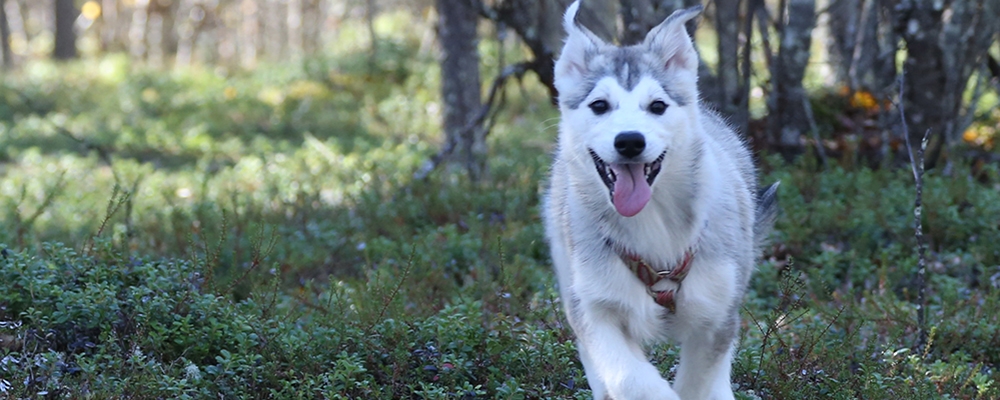
We have a few privileged dogs that spend their winters with us and their summers with other people, and a few others with local admirers who offer them a sofa for a few nights when either they or the dog need extra cuddles.
- Some dogs winter at the farm and summer in foster homes
- Short-term fostering — even just a few nights — is welcome
Could you foster?
If that sounds appealing to you, just get in touch. We have such a wide range of dogs of different ages and characters that I am sure we can find the perfect one for you. And for the dogs, that extra sofa time is an offer that is seldom turned down!
Dog Sponsorship
Many people fall in love with particular dogs during their tours — or even just on paper — and want to support us in our attempt to give each and every dog the best possible care in life. Donations can be set up by direct debit or through PayPal.
- Bronze (puppy): €100/year — 25% off day safaris
- Silver (senior/non-working): €350/year — 50% off day safaris
- Gold (working dog): €700/year — one free day safari
- All tiers include an info card, certificate and regular updates
Puppy Sponsorship (Bronze): €100/year or €8/month
Pups are wonderful but cost more than an adult dog. Once weaned they need feeding five times a day for months, plus an intensive series of inoculations and deworming: quad and rabies vaccinations at 12 weeks, 16 weeks, and 1 year and 12 weeks, with extra help against mosquitoes in their first year. Your €100 doesn't quite cover a pup for a year, but goes a long way towards raising our future stars. Bronze sponsors receive an information card, a certificate and four updates a year, plus 25% off any day-length safari.
Senior / Non-Working Dog Sponsorship (Silver): €350/year or €25/month
For our canine senior citizens living out a comfortable retirement on the farm, and dogs unable to run for medical reasons. Most retired dogs have minimal veterinary costs and eat less than working dogs, so this level covers our estimate of their annual food (around €350/year). Silver sponsors receive an information card, a certificate and a newsletter-style email update twice a year with photos, plus 50% off any day-length safari.
Working Dog Sponsorship (Gold): €700/year or €58/month
We estimate keeping a working husky for a year costs about €2 per dog per day (across 200+ dogs), counting only averaged food and veterinary costs — hence gold level is €700/year. Gold sponsors receive an information card, a certificate and a newsletter-style update four times a year with photo and video attachments, plus one free day-length safari of their choice.
- Bronze (puppy)
- €100/year (€8/month)
- Silver (senior/non-working)
- €350/year (€25/month)
- Gold (working dog)
- €700/year (€58/month)
Donations and other Sponsorship Options
We have a variety of sponsorship options for those who would like to contribute to the costs of running the farm and our commitment to keeping alive any dog that is happy and healthy, whatever its ability to earn its keep. As most people can't afford the real cost of keeping a sled dog for a year (gold level sponsorship), we offer a range of options that you are welcome to give in person or as a present on someone's behalf.
- Agility equipment donation: ~€50 (with a named sign)
- Kennel sponsorship: €250 (with name plaque + photo)
- Cage sponsorship: €500 (with name plaque)
- Donations by direct debit or PayPal; any amount welcome
Small donations
Even small donations are very welcome. Everything goes back into the farm and the dogs, who appreciate any extra bone that comes their way! Donations can be set up by direct debit or through PayPal. Around €50 tends to go towards a piece of agility equipment that can carry a sign with your name on it. We continuously develop the agility course — young dogs love the obstacles in summer, and we use the easier ones to build trust with older dogs.
Kennel Sponsorship: €250
A new kennel costs between €200 and €500, depending on its size and whether it is a 'sick-dog' kennel (accessible by a dog wearing a medical cone), a double kennel where dogs can sleep together, or a single. When you sponsor one, we make a small plaque with your name on it that stays there as long as the huskies let the kennel survive, and we send you a photo of your kennel, your plaque and the happy dog moving into its brand new home.
Cage Sponsorship: €500
A cage costs around €500 in materials alone to erect. Built in moveable pieces, each has a barricade of water-resistant plywood dug into the ground to stop dogs digging out, bowl holders screwed to the front so they can be fed and watered through the fence without destroying their bowls, and a wire roof to stop them climbing out. Sponsored cages carry a plaque with the sponsor's name and benefit the dogs for a long time. Extra cages — used when dogs have collar sores or need the warmth of another dog on super cold days — are a big help.
- Agility equipment
- ~€50
- Kennel sponsorship
- €250
- Cage sponsorship
- €500
Lucky Adoptees
Through our work and care, some dogs have been adopted into new homes. Here you can read their stories, their journeys and how they have settled in. Those with (HH) after their names are from our own farm; the rest are local rescues we have homed, or dogs from the nearby Transun UK / Santa Safaris farm we managed for a number of years.
- Dogs rehomed across Europe and as far as the USA
- (HH) marks dogs born at our own farm
- Profiles cover temperament, ideal home and exercise ability
- Leon ran over 21,000km in his career before retiring
A worldwide map of adoptees
At first we prioritised homing Transun's older or non-running dogs over our own oldies, because we knew they wouldn't get to live into retirement on their own farm. A map on the page shows most of the places our dogs have lived, or still live, in their adoptive homes.
Some of their stories
Vulpes (born 28 Jul 2009) came from a racing kennel in Norway where he was one of the best leaders; he's friendly, loves cuddles and is house-trained, though he gets stiff in his hips if pushed too hard. Leon was our #1 top runner for many years and ran more than 21,000km in his life; now 12, he retired together with Sanna, a shy star lead dog, so the pair could settle into a new home together. Yasper and Yesper are two large fluffy siblings who would only be rehomed together, as they are inseparable. Each profile notes the dog's ideal new home, how it copes alone during a working day, and whether it can still do canicross or skijoring.
Reserved Dogs
These dogs have either already found a future retirement home and are looking forward to moving in with their new family, or are ones we feel are best living out their days with us at Hetta Huskies. In other words, new guides: please find a different dog to fall in love with!
- These dogs are not available for new adopters
- Many are reserved by current and former guides
- Bonded pairs (e.g. Cuillin & Lyra) are kept together
Currently spoken for
A long, affectionate (and frequently updated) list of dogs already claimed by guides and friends of the farm — for example Atlas, Sonic, Smashie and Jumbo for Eliel; Cherry, Laika, Bell, Mollis, Laddie, Indigo and Pilot for Anna; Elsa and Isbre for Carla; Yukon and Quest (and hopefully Happy and Selje) for Andrea and Letizia; Lyngen and Lhotse for Jenni. Some dogs, such as Pilot, Indigo and Cuillin, have more than one hopeful future owner gently competing for them. As Anna notes, 'I am sure I am missing a few!'
Sponsor Me Please!
You can choose any of our huskies who aren't already sponsored, but the following are examples from each category that would love the extra help. Don't worry if you can't afford the full cost of keeping a dog here for a year (as detailed in sponsorship options) — any contribution at all towards these characters is much appreciated. Please send all sponsorship enquiries by email.
- Sponsor any dog not already taken — any amount helps
- Profiles list running position, date of birth and season kilometres
- Some dogs (e.g. Hickory, Japp) need extra food and care
Older and 'less-good' sled-dogs
These older or 'less-good' sled-dogs are, by nature, probably not easy to find new homes for, and we fully expect to care for them into old age. That is why they are on the 'please sponsor me' list — any help at all with their long-term care would be appreciated.
Working dogs who need extra support
A random selection of dogs that could be sponsored as part of our working dog sponsorship program. Hickory, one of our H-pups born in 2014, is an extremely hard worker who needs a lot of extra food to stay healthy. Japp, one of our strongest and fastest Alaskan huskies, has a short coat and burns so much energy that he needs to be fed more than most and watched closely. Indigo came as a very shy rescue who cowered in the kitchen; after a lot of time and love she has become a happy lady and a leader-in-training who has to wear a special fluffy harness to avoid harness rub. Maple is pretty but extremely difficult to find running and cage partners for, so she needs extra socialising time.