English
 Français
 Deutsch
 Suomi
Suomi Español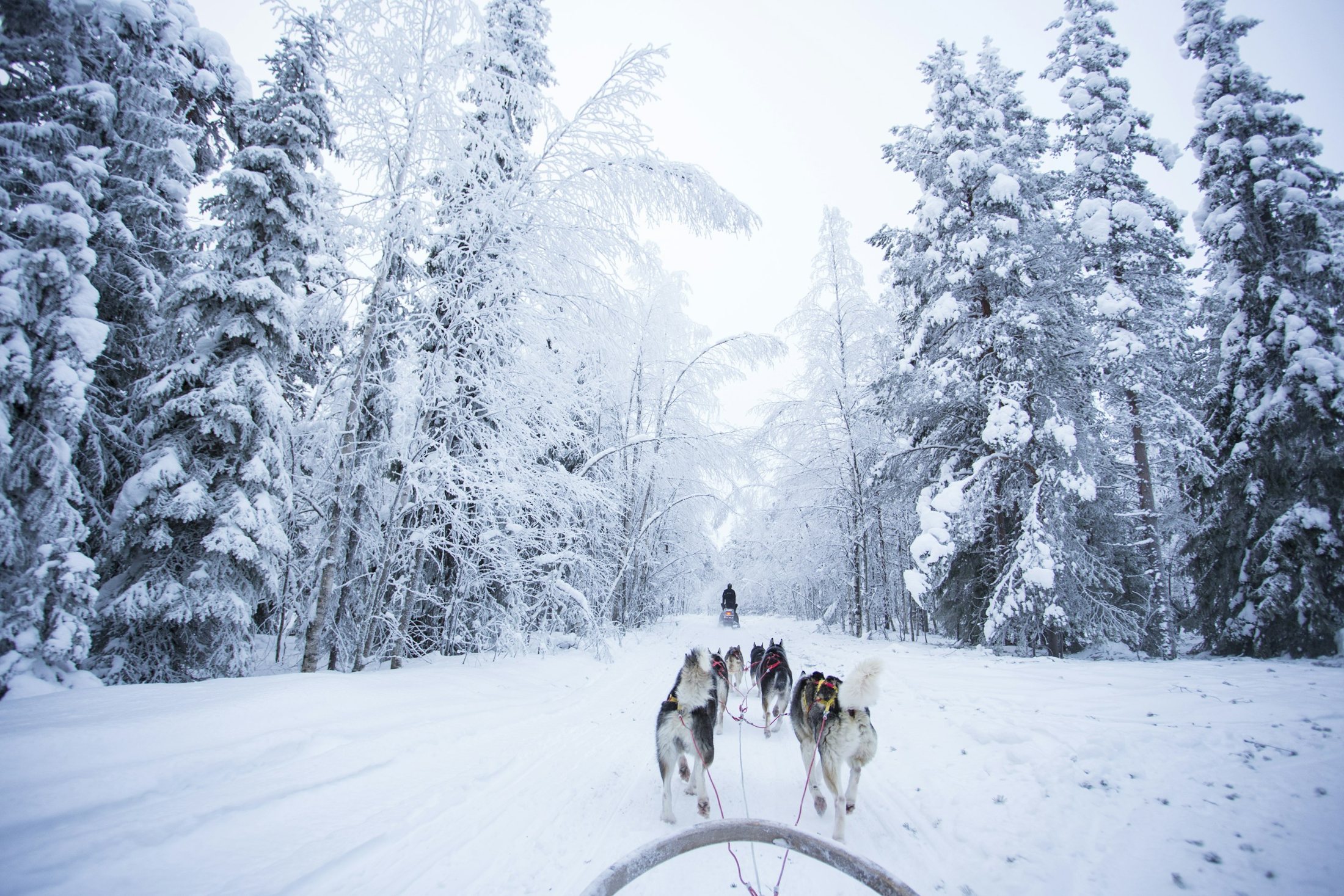
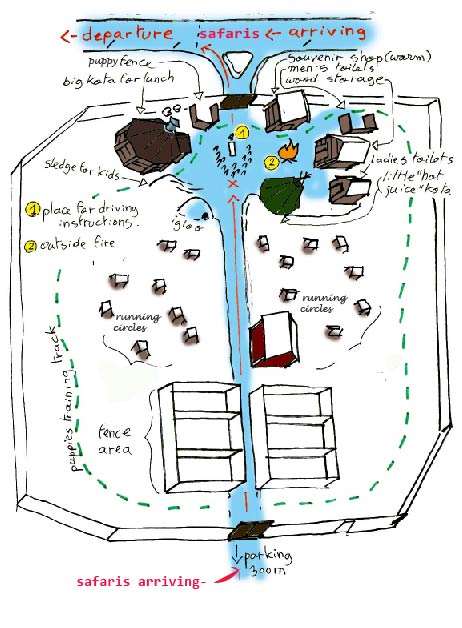
Our farm is divided into three distinct areas: The Farmhouse, The Dog Kitchen and The Sick-Dog Area. On arrival at Hetta Huskies you will see two main buildings - the farmhouse and a separate outhouse - and a parking area. You will immediately see that this is an active, dynamic farm, as we will more than likely have projects like kennel repairs and building ongoing in the main yard.
- Three distinct areas: the farmhouse, the dog kitchen and the sick-dog area
- 200m-long lit path links the farmhouse to the farm itself
- Whole perimeter enclosed by 2m-high fencing to protect dogs from reindeer and wild animals
- Farm divided into cage area, chain area and kota / client area
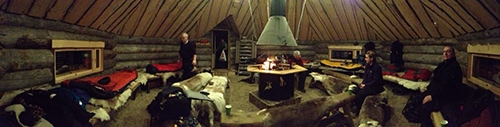
- Wooden insulated kota where multiday clients sleep on the first night; fabric kota, igloo, piste and peekaboos for fun
- About 20 hectares of land with a hand-cut GEE/HAW training maze and 2km safari tracks
The Farmhouse and Yard
The farmhouse, which is also our home, is used by all the guides during the day for communal meals and computer work (and by the occasional client escaping the cold). At its back is an enclosed area where clients add layers and change footwear before and after safaris. Most short-safari clients no longer need to come inside, as we moved the souvenir shop back up to the farmhouse area in the summer of 2016. The shop - hard to mistake thanks to the large pyrographied bear on its door - sells arctic clothing, toiletries, hand-carved and hand-painted items from our guides, and Hetta Huskies mugs and buffs.
The yard's second main building is a garage workshop with several functions: a heated kit storage area and workshop, winter kayak storage, a drive-through shelter for snowmobiles and sleighs, and a central warm room serving as a dog kitchen and indoor sick-dog cage facility.
From the House to the Farm
Behind the farmhouse and outhouse is an enclosed recuperation area for sick dogs or those transitioning between nights on beds in the guide or farm house and the farm itself. The enclosure matters here because the area is quite close to the main road. A 200m-long lit path connects the farmhouse area to the farm, with a building-materials store on one side and a storage barn on the other, before a small bridge and the junction to the walking gate or main front gate.
Look out for dogs just after this junction, as the farm slipstream crosses the track here and teams often fly past! Just before you turn towards the main gates, look left: in summer you can clearly see the pretty impressive 'GEE HAW' training area.
The Enclosed Farm
The whole perimeter of the main farm is enclosed by 2m-high fencing, so any escaped dogs stay within a restricted area. The fencing protects the local reindeer from our dogs and our dogs from visiting reindeer and wild animals (eg the two marauding wolves that killed dogs at the Santa Safaris / Transun UK farm just 40km from us in 2010). We saw their tracks around our farm but believe the good fences kept our dogs safe.
The farm is divided into three areas: the cage area, the chain area and the kota / client area. The first fences you pass are the puppy kindergarten and puppy Hilton. Our dogs live in a mixture of cages (with companions) and solitary chains; the central area is individual running-circle chain places on a sandy, well-drained slope, with the client area beyond.
The Client / Kota Area
The client waiting area has one traditional fabric kota (the local word for teepee) and one luxurious, well-insulated wooden kota where multiday clients sleep on the first night of their safari - building this arctic kota was a multi-year project. There is also a mini wooden teepee in a small cage for the pups, an outdoor (dry) toilet with light, a woodshed and an open fire area. Our agility trail winds between the trees, and there is plenty of fun to be had: taking photos through peekaboos, seeing how many people fit into the igloo we build each year, and a piste for all the young at heart to sledge on - not just the kids!
When clients are on the farm in winter, we keep fires burning in each kota and the central fireplace, with hot drinks in the smaller kota and food served in the larger. We encourage clients to stay active and warm whilst waiting, and children should be accompanied at all times, particularly when walking pups.
Training Network
We have about 20 hectares of land on and around the farm, with 2km safari tracks running around the perimeter. Inside these is an extensive track network - most of it cut and dug out by hand - used for GEE and HAW training in summer and quad-bike training in autumn and spring. Some tracks are usable year-round; others, like some skijoring trails, only in a particular season. This is why we have separate winter and summer versions of the farm tracks: summer tracks emerge that the winter guides have never seen, and vice versa. The start line most clients depart from is actually in the middle of our farm trails.