
 English
 Français
 Deutsch
 Suomi
Suomi Español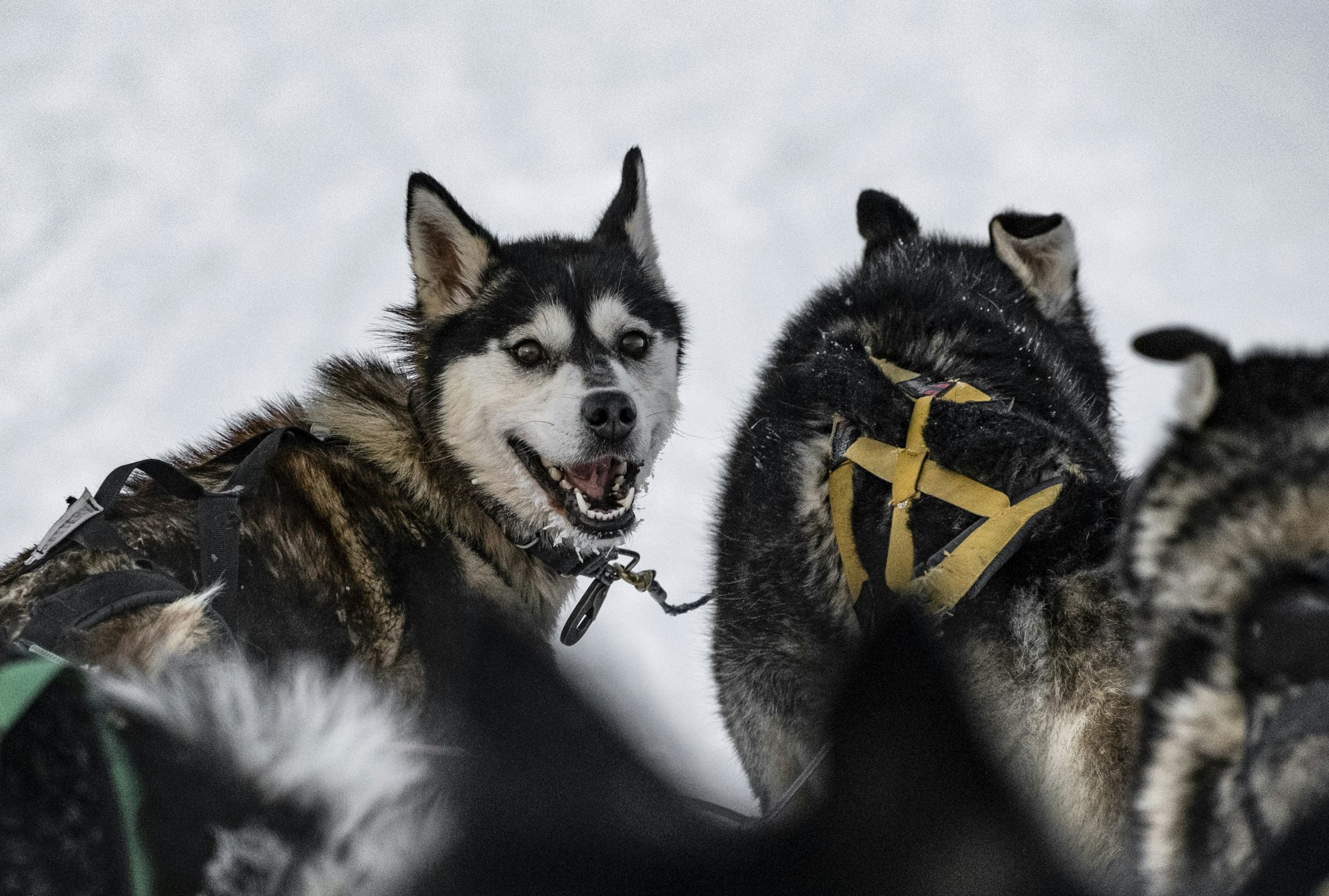
The teams generally consist of 4 to 6 dogs for solo sleighs and 8 to 12 dogs for paired or family sleighs, depending on the safari, the conditions, the experience and strength of the musher and the overall weight in the sleigh.
- Solo sleighs run 4-6 dogs; paired or family sleighs run 8-12 dogs
- Team size is estimated in advance, then adjusted once we meet the clients
- Too many dogs = too fast and higher injury risk; too few = strain and slow going
- Dog mushing is not an exact science - teams may be rebalanced mid-safari
- Females in heat always run at the back to avoid distracting the males
How many dogs run in a team?
Since we can never know all the variables in advance, we have to estimate the optimum number of dogs for each safari before meeting the clients, based on the information we have to that point. Too many dogs in a team and they run too fast - leaving clients scared or disappointed that the safari finished too quickly, and putting the dogs at greater risk of injury. Underestimate the difficulty and the dogs run slowly, under too much strain. Dog mushing, then, is not an exact science.
Once we've met you, we may make immediate adjustments so all teams run at roughly the same speed. If we have some 50kg mushers and some 150kg mushers in one group, we'll likely take dogs from the lighter person's sleigh and add them to the heavier party's. (Don't worry about your weight, though - if we get the team size right, the dogs really won't notice.)
Positioning and pairings
Many people ask whether we always run the same dogs together, whether certain dogs are always in the front or back teams, and whether the pairings are constant. The answer is mostly no - though the more difficult a dog is (grumpy or unpredictable with others), the more restricted our choice of who can run beside it and where it can be placed.
We always aim, on paper, to build equally balanced teams, but dogs are animals and, like humans, can have off-days. So we may decide mid-safari to rebalance the strength of certain teams by moving dogs (or even clients!) around. Multi-day clients generally go out on a training ride on their first day, so we can test how well the team compositions are working, and we then solidify the teams once they are all moving at roughly the same speed.
Lead, swing, team and wheel
The leaders of the first team are an elite few who want to run no matter the conditions and don't need a team ahead to chase. Both older, experienced dogs and younger, keen ones can lead; we tend to use the older dogs later in the day, once the speed and excitement have settled.
The back teams are always the girls in heat. It might seem to make sense to put them in front for the others to chase, but in reality the back is better, since the males then aren't distracted by scent markings as they run. Our whole farm layout is built around this: these dogs are put into the teams last (less risk of exciting fights and accidental pregnancies), and when the dogs return through the front gate they end up beside their own cages and can be taken straight home.