English
 Français
 Deutsch
 Suomi
Suomi Español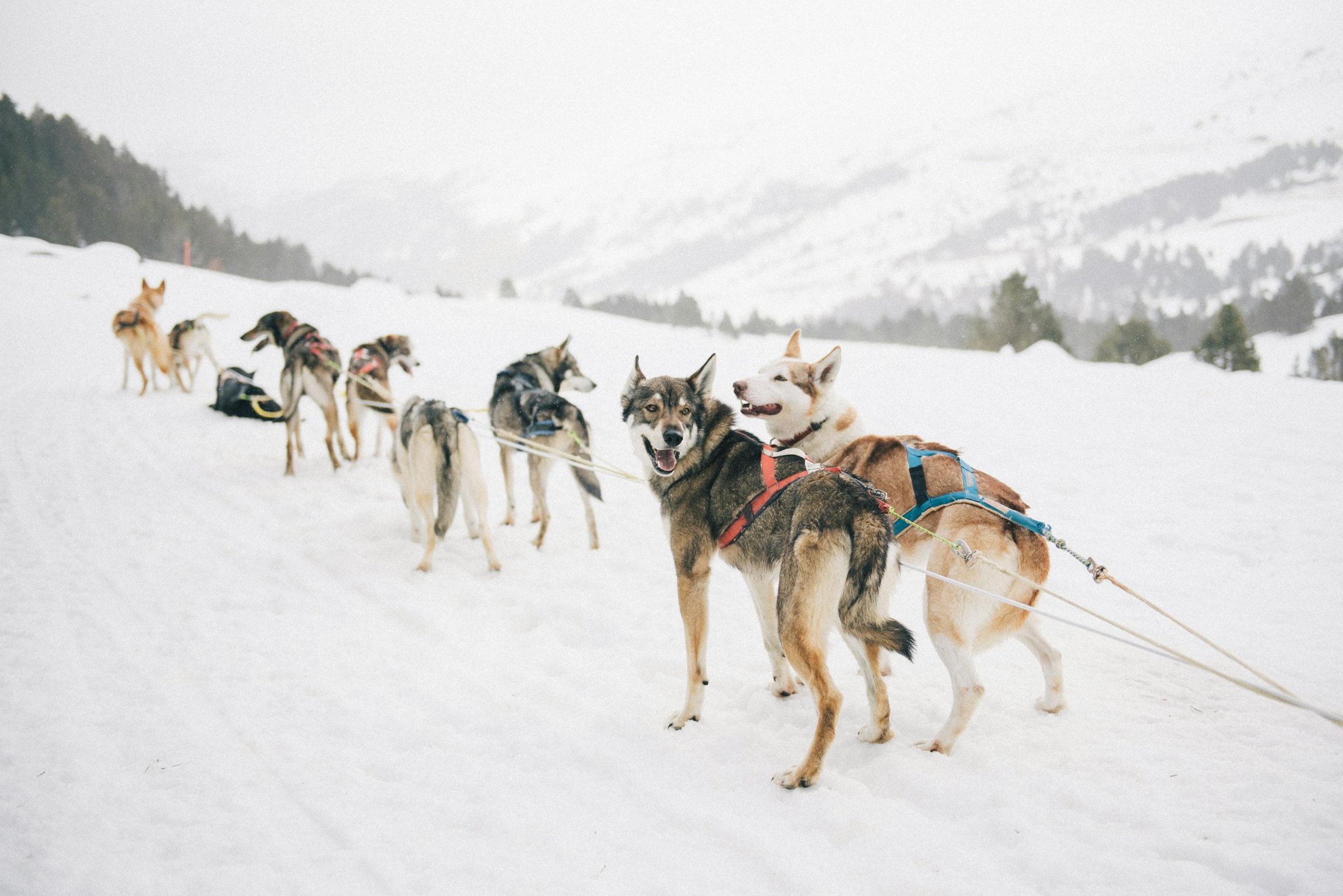
Our rigorous, year-round training programme is respectful, humane and safe for our huskies. We train by building trust and friendship while - just as with a child - keeping clearly defined boundaries and behaviour expectations. The programme runs across autumn, winter, spring and summer, and also covers potty and puppy training.
- Year-round, humane training built on trust, friendship and clear boundaries
- Autumn conditioning starts on quad bikes / carts once temperatures stay below 5C
- Low speeds early on build endurance and proprioception while minimising injury
- Dogs trained to wait calmly and quietly to conserve energy and reduce fights
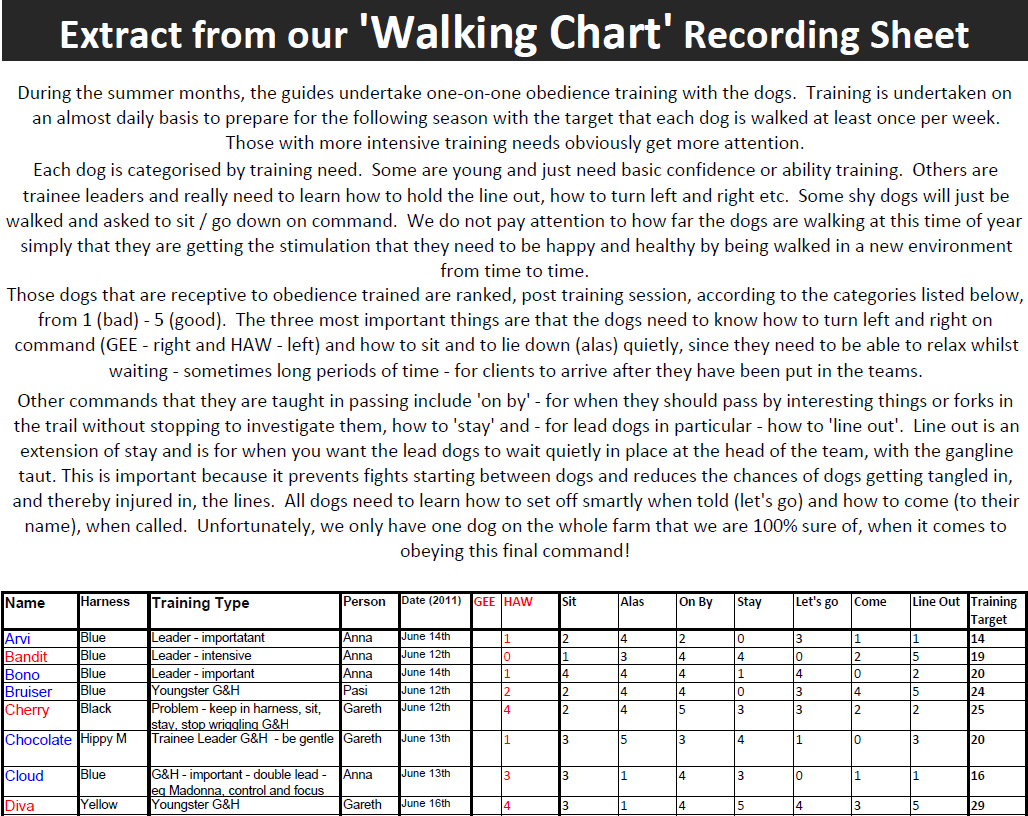
- A GEE / HAW area on the farm teaches turn commands before the 6km route opens
Autumn season - conditioning
We start condition training on quad bikes and training carts in autumn, once temperatures have consistently dropped below 5C. Speeds are kept really low so the dogs build endurance and proprioception rather than speed, which keeps injuries to a minimum both then and later in the season.
As winter approaches we add miles to build endurance. Once the snows come and we switch to sleighs, we have less control over speed, but by then the dogs are fit and their muscles strong enough to protect their joints if they stumble. The guides are itching for the longer trails, but we need a good base of snow before we can compact the routes and make them safe for dogs and musher alike.
Conservative early-season combinations
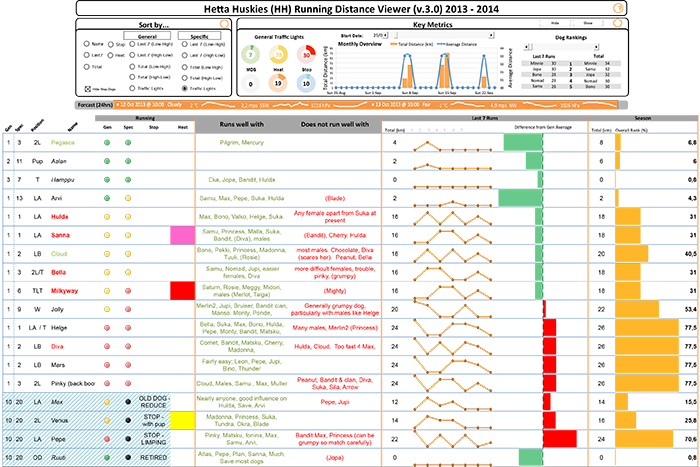
At the start of the season we are very conservative about the combinations we use, since energy is much higher now than later, when running has settled back into an everyday routine. The dogs run such low and such similar mileages at this point that the traffic lights take a while to 'get going'. We try to run every dog at least every other day so they build conditioning and proprioception during this important training time.
They also have to relearn how to take breaks and wait calmly and silently around the trails. This teaches them to conserve energy at the right moments - and lets us hear ourselves think, rather than shouting over barking dogs as we give driving instructions to clients. It also reduces the risk of fighting (or destroying equipment) while waiting in line.
Opening the routes
At the start we are still restricted to very few routes, since it takes a while for the snow to be deep enough on the marshes and the rivers safe enough for our longer routes. But we have a good GEE / HAW training area on our own land, so the dogs don't get bored in a limited area - they are constantly challenged to turn to our commands. We open the marshland tracks immediately outside the farm first, then venture onto our 6km route once the rivers are safely frozen.
We also reintroduce the previous year's pups to running without jumping up excitedly and eating their harnesses at every stop. These are probably the guides' favourite months: you learn something new about the dogs every day - who enjoys leading, which new pairings work - and build a picture of each dog's potential and who is ready for more responsibility.