English
 Français
 Deutsch
 Suomi
Suomi Español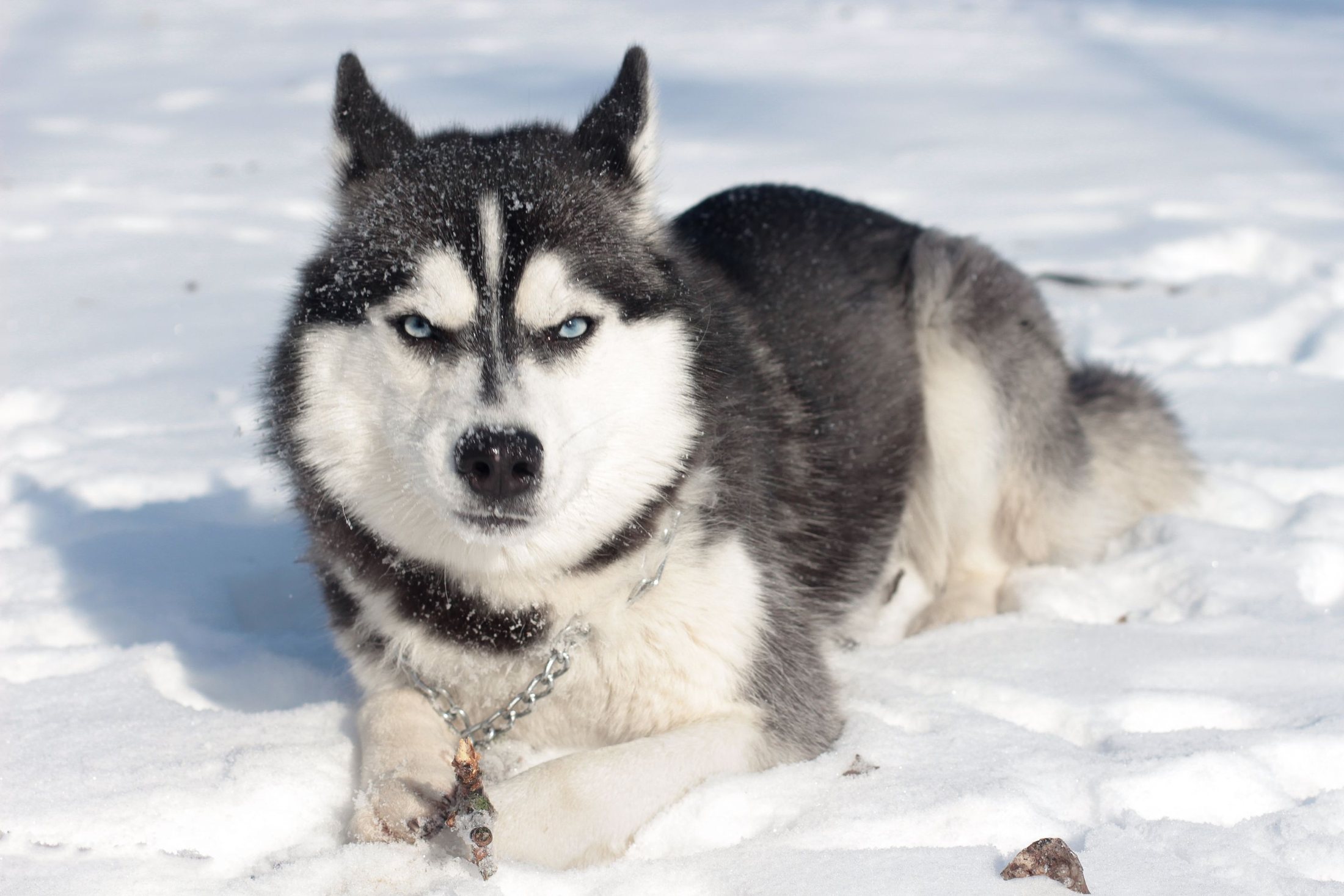
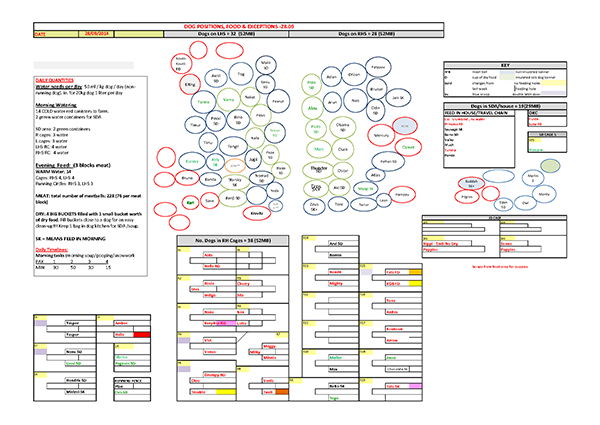
The food that the dogs are given has a huge impact on how healthy and happy they are, and how well, in turn, they can run. Sled dogs have special food requirements. Along with their power comes a huge appetite. While a normal dog might get by on 1,500 calories a day, sled dogs can easily consume up to 10,000 calories per day.
- Sled dogs can consume up to 10,000 calories per day vs ~1,500 for a normal dog
- Winter: hot meat or dry-food soups morning and after running; hundreds of litres of hot water daily
- Winter daily intake ranges from ~2000 to ~7000 calories depending on mileage
- Summer: smaller portions (~500-1000 cal/day) with fresh water changed daily
- Stainless steel bowls, bones from local hunters, and supplements like psyllium as needed
Meat, dry food and winter soups
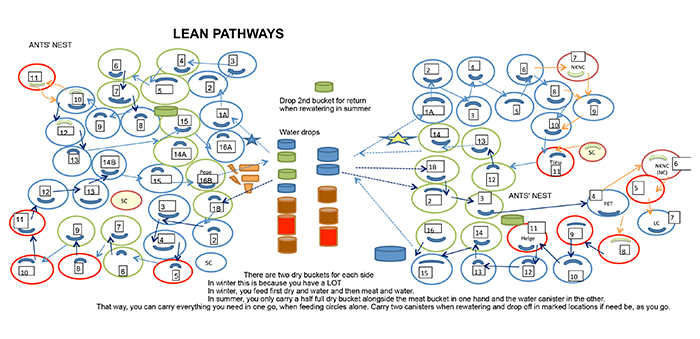
We use a mixture of meat and dry food: the dogs love fatty meat, but a good dry food adds the extra nutrients high-end athletes need. In winter we can't leave water in their bowls because it would freeze, so we monitor their intake carefully and encourage fluids with hot soups at key points. We want them used to drinking rather than eating snow, which can actually dehydrate them.
In winter the dogs get a meat or mushed dry-food soup made with steaming water first thing in the morning, at least two hours before they run, and another soup after running - unless it is very hot, when we may use blood ice cubes to lower their core body temperature. We go through hundreds of litres of hot water a day. Their evening feed, a mixture of dry food and meat, comes right at the end of the day, and altogether this adds up to between 2000 and 7000 calories, depending on the mileage they run.
Summer feeding and fresh water
In summer the dogs have water in their bowls at all times (though with those who play with their bowls, keeping water in them is a battle) and the adults are fed at the close of the day - usually a mixture of meat and dry food, sometimes just dry food. The food is still high quality, but they burn fewer calories now (c. 500-1000 a day), so portions are far smaller. We change all water in the bowls and canisters once a day so the dogs never drink stagnant water. Pups start on a high-quality puppy food, then move to a mix of puppy and adult food as they transition into the adults' feeding system.
Bones, supplements and individual needs
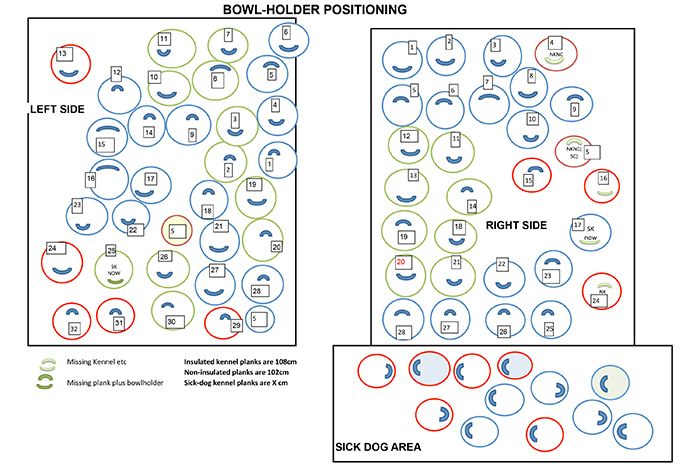
Soft food alternatives are available for dogs recovering from illness or with tooth problems, and we give additional supplements depending on need. Our bowls are stainless steel so no rust gets into the food. In elk hunting season, locals bring us bones they can't otherwise use - a win-win all round. Dogs on the circles can all have bones with no problems; those living in pairs in cages are separated so each can eat bones for a couple of hours a day. Some natural supplements help too - we use psyllium, for instance, to 'steady' the digestive tract when the going gets tough at the peak of the client season. Just like people, every dog is an individual with its own personality and eating habits.