
 English
 Français
 Deutsch
 Suomi
Suomi Español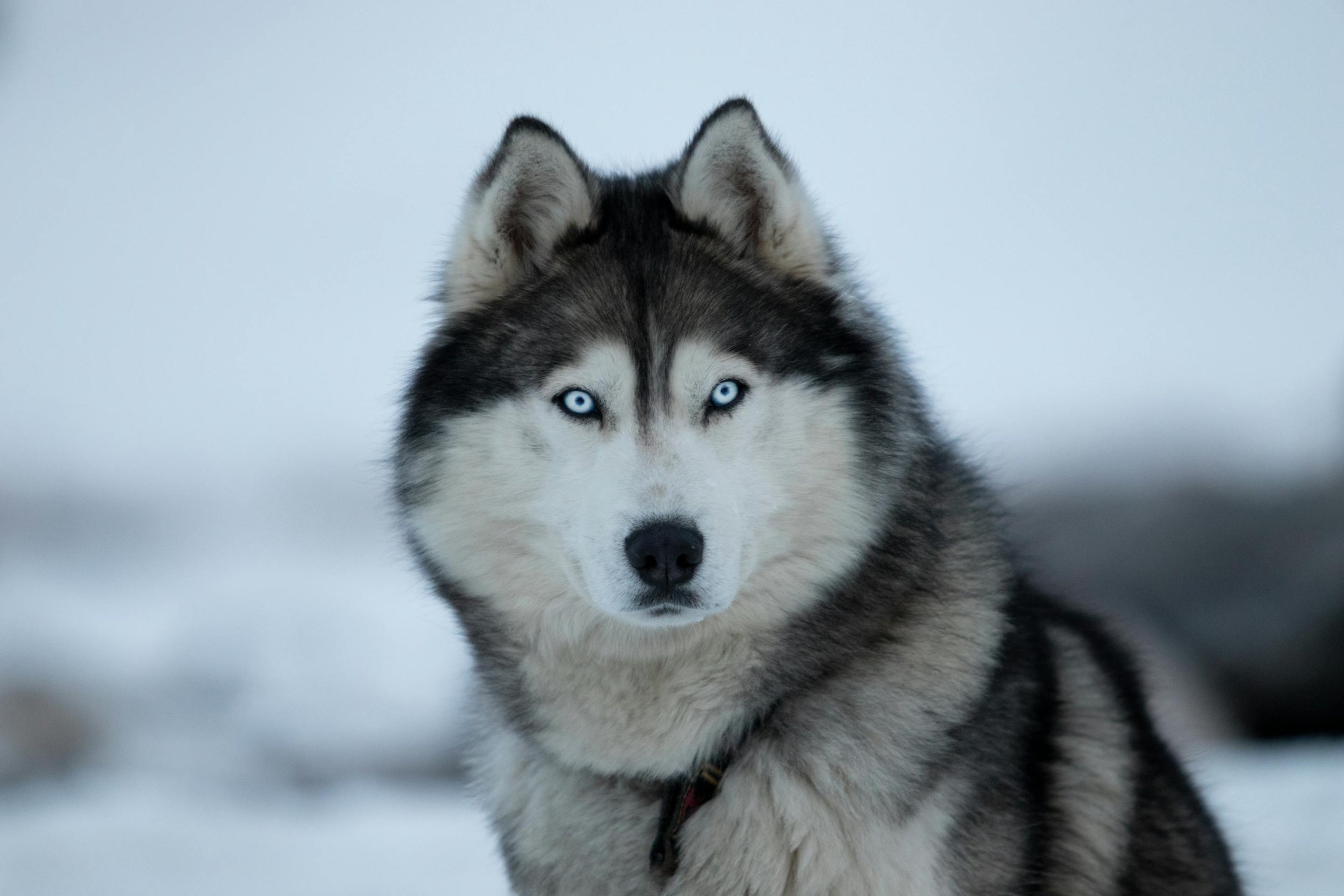
Some are true polar breeds - eg the Canadian Inuit Dog, one of the oldest and rarest remaining pure-bred indigenous canines. Others, like the crossbred Eurohound (a mix between the Alaskan Husky and the Pointer), are not. The Eurohound has both the Alaskan Husky's sledding ability and the Pointer's enthusiasm and athleticism, and is one of the most formidable sprint-racing sled dogs in the world.
- The Canadian Inuit Dog is among the oldest and rarest pure-bred indigenous canines
- Alaskan Malamutes are larger and more dominant than Siberians
- Sakhalin Huskies (Japan) inspired the film 'Eight Below'
- Laikas (East/West Siberian, Karelo-Finnish, Russo-European) are versatile hunting spitz dogs
- Finland's Tamaskan Dog was bred to resemble a wolf
- Sleigh parts up to 9,500 years old have been found in Finland
The Alaskan Malamute
The Alaskan Malamute is often used in Disney films portraying huskies, as it matches the stereotypical image many people hold. A large breed indigenous to upper western Alaska, it descends from the dogs of the Mahlemut tribe of Inuit (today the Kobuk people). Malamutes are larger and more dominant than most Siberian Huskies but, sharing wolf ancestry, still look very similar. For the Mahlemiut, the Malamute was as much family as any human - children and puppies crawled together on the hut floor - though food shortages prevented large-scale breeding, so the dogs were of high quality but few in number.
Lesser-known huskies
Less well-known breeds include the Eskimo Dog, the Toganee, the Mackenzie River Husky, the Timber-Wolf Dog, the West and East Greenland Huskies, the Baffinland Husky and the Ostiak. The Timber-Wolf Dog of the Yukon basin was a first-cross between huskies and timber-wolves bred as pack leaders. Baffinland Huskies had black coats with white markings. The East Greenland (Angmagssalik) Husky was considered the oldest and least diluted type. Today's Greenland Dog is a large husky-type kept as a sled dog and used for hunting polar bear and seal, with a very dense double coat, padded feet, erect ears and a curled tail.
The Sakhalin Husky and the Laikas
The Sakhalin Husky is a spitz type related to the Japanese Spitz and Akita Inu, 56-66cm at the withers and 30-40kg, often russet-red and black with fine, thick fur. Sakhalin Huskies were the dogs of the infamous Japanese Antarctic expedition on which 'Eight Below' is loosely based. Other spitz dogs include the East Siberian, West Siberian, Karelo-Finnish and Russo-European Laikas - mostly thick-furred, pointed-eared hunting dogs, genetically very close to wolves and among the oldest types of dog. The East Siberian Laika is the largest and most even-tempered, strong enough to pull sleds as well as hunt.
History of huskies in Finland
Evidence suggests dogs were used for pulling in Finland in the 16th and 17th centuries, and sleigh parts dating back 7,000 and even 9,500 years have been found. Mushing waned through the 19th and 20th centuries, so by its 1960s revival Finland had few traditional Northern huskies left. Most huskies here today are Siberians, though Alaskans exist too; Finnish mushers set little store by a dog's looks, caring instead about how it works and runs. The Tamaskan Dog - a mix of Malamute, German Shepherd and Siberian, bred to look like a wolf - originated here. The Samoyed, a pure-white spitz once called 'the smiling dog', was also used for herding reindeer and pulling sleds.