
 English
 Français
 Deutsch
 Suomi
Suomi Español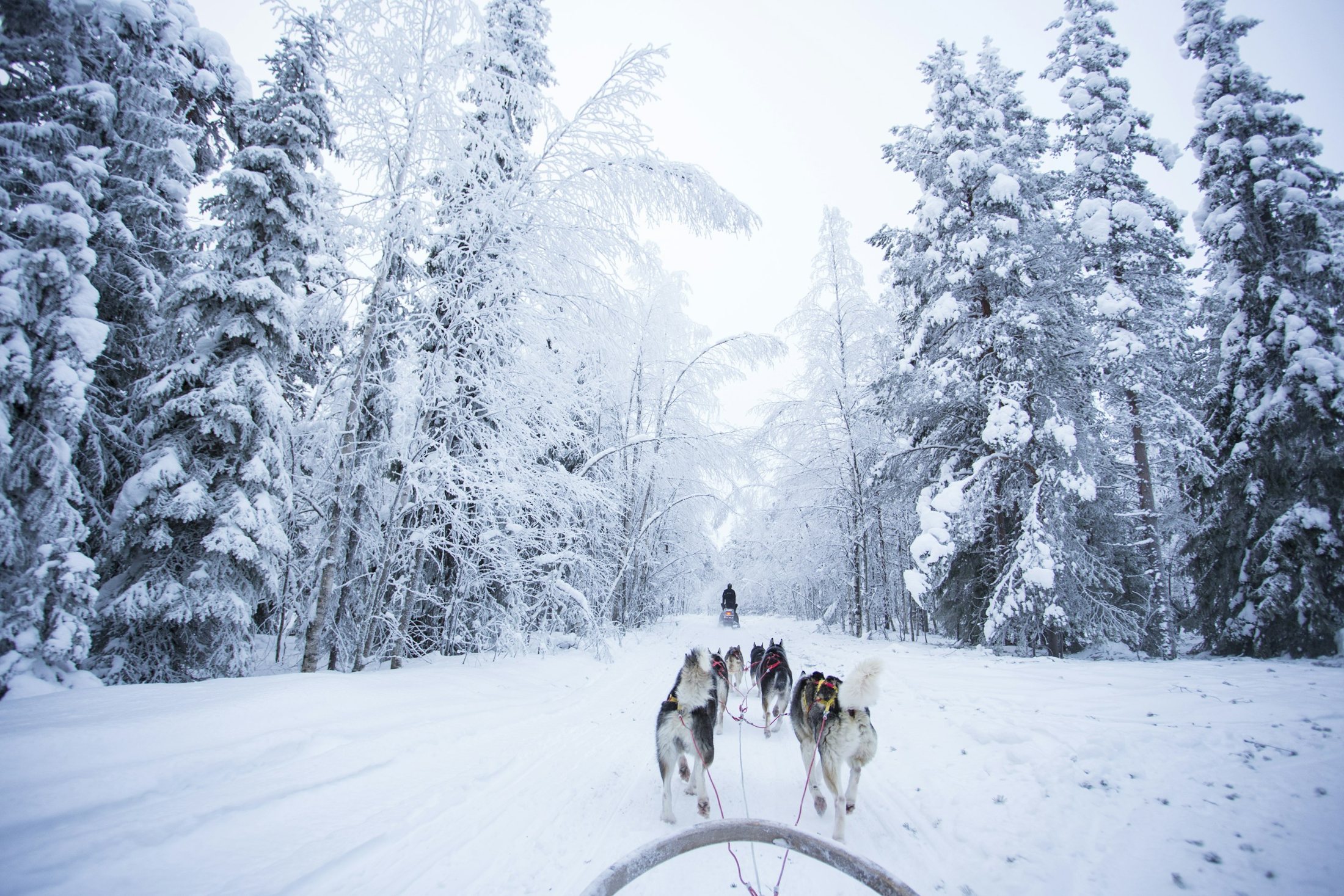
Why should Finland lead Europe on tougher sleddog welfare guidelines? Tourism is a major player in the economy: in Enontekio, where we are based, it equated to c. 50% of the municipality's direct income in 2011, and the sector has grown since. Sleddogs are pivotal to a healthy tourism business, yet they are currently protected very poorly under national legislation.
- Tourism is c. 50% of Enontekio municipality's direct income (2011 figure, now likely higher)
- Animal-based tourism in Finnish Lapland is worth c. EUR 50 million/year
- 42 of 158 discoverable animal-based tourism companies in Finnish Lapland (2017) were husky companies
- c. 4000 dogs across discoverable farms; real number likely twice as high
- TUI 2017 research: ~70% of holidaymakers want excursions; 60% only if global animal welfare standards are met
Tourism... a major player in the economy
According to Visit Finland 2018, domestic and foreign tourist numbers in Finnish Lapland are very similar, with the two largest foreign groups coming from the United Kingdom and other parts of Europe. Unsurprisingly, the tourism sector employs more than 5.5% of Finland's population as a whole, and far more in rural areas including the fourteen key regions of Finnish Lapland.
An EU-funded project, 'Animal Welfare in Tourism Services', surveyed animal-based tourism operators and sleddogs across Northern Europe. In 2017, 158 animal-based tourism companies in Finnish Lapland had discoverable websites; 42 of these were husky companies. The real number of dogs in Finnish Lapland is likely twice as high as the c. 4000 those discoverable companies hold.
What is the value of this industry?
Animal-based tourism in Finnish Lapland is worth c. EUR 50 million/year - income from reindeer tourism is now comparable to the value of reindeer in the meat industry. Sleddogs and related programme services have likewise long been a cornerstone of the winter tourism product.
Despite this, sleddogs are poorly protected under national legislation. There are no enforceable sleddog-specific regulations dictating their basic care, nor any agreed voluntary codes of best practice for farms to baseline against. Seen in this light, we should be spearheading a European drive towards tighter legislation to safeguard this important part of the northern economies.
Regional cooperation needs between stakeholders
Regional cooperation between businesses will become more vital as tourist numbers increase. For dog sled businesses in particular, long-term viability is tied to the outcome of negotiations with reindeer herders and other land users over trail access.
In 2014, for instance, Santa Safaris / Transun (a UK company) brought a Swedish company to Enontekio for the short winter season rather than using local businesses; they carried kennel cough with them and infected some local dogs, putting all of the area's dogs at risk. The risk from outside operators is not only disease, however: trail access is sensitive, particularly in the Saami areas, so it is vital that trail users respect the shared needs of local stakeholders.
What should be done, moving forward?
Market research commissioned by TUI in January 2017 showed that around 70% of holidaymakers wanted the option of excursions; of those, 60% said they would only want them if the attractions met global animal welfare standards.
Ultimately, change in any industry comes from incrementally shifting perspective until the tipping point, at which the new perspective becomes the norm. Unfortunately, the legislation is generally not available in English, making it almost impossible to track down - a real issue given how many sled farms in Scandinavia are owned or run by foreigners.