English
 Français
 Deutsch
 Suomi
Suomi Español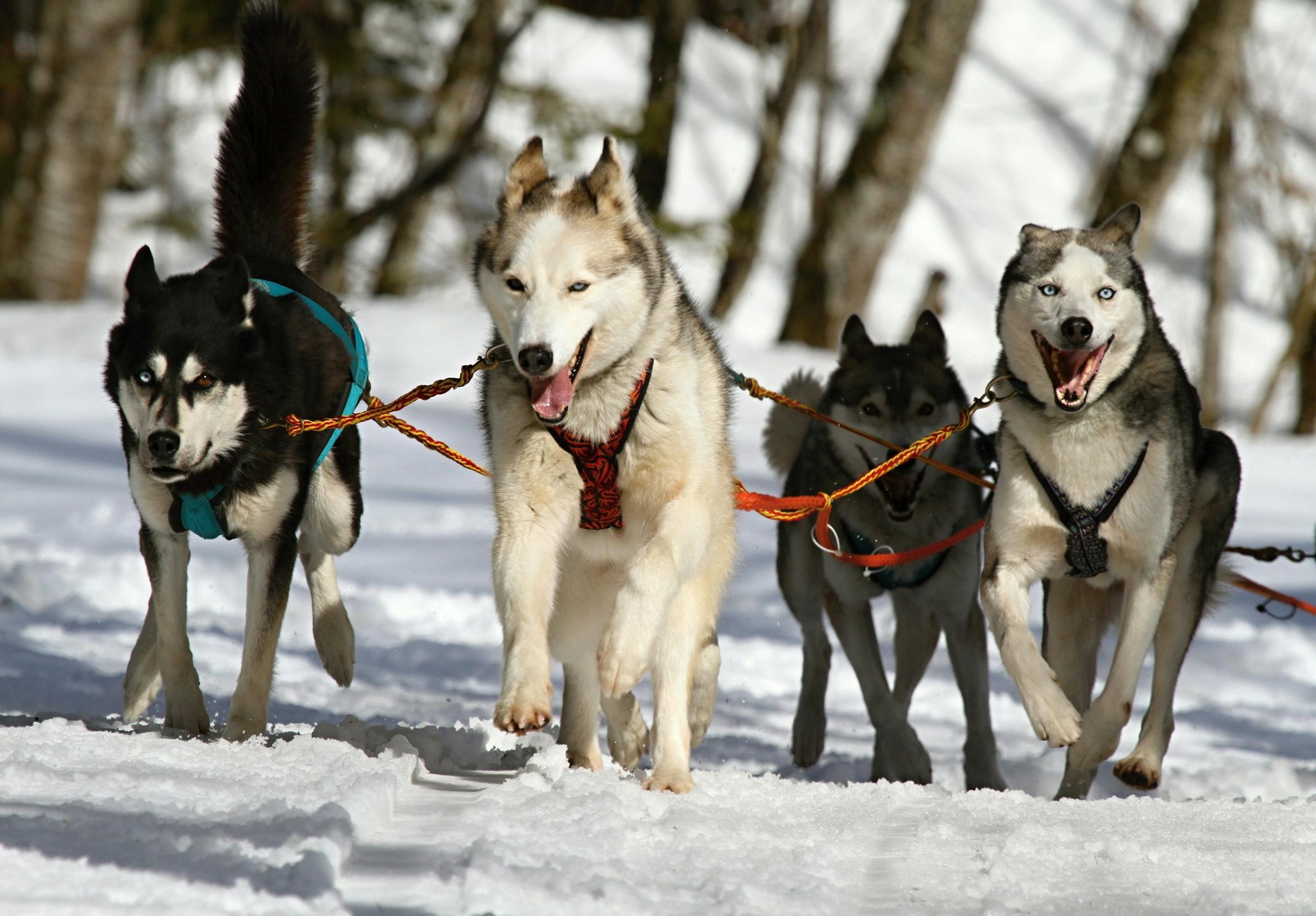
Surprisingly enough (or maybe not), our whole year revolves around having our dogs, equipment and guides ready for the winter client season. Yet each season is quite different and the activities we do with the dogs vary with each. One common denominator: every year we reach the start of winter wondering how we still have so many 'planned' projects outstanding. On an animal farm the work is simply never done, and we can never get as much done in a day as we would want.
- Winter client season is the hub around which the entire year revolves
- May-June: developmental sleigh training; pups (6+ months) introduced to running
- Summer (Jul-Aug): one-on-one dog training, performance analysis and the main building season
- Autumn: conditioning training begins once temperatures drop below 5C; quads switch to sleighs
- December: up to 6 safaris a day, 19 sleighs on the start line; days from 6.30am to midnight in temps to -40C
- Feb-March multi-day season: up to three 2-day tours per week plus a 5-day or two 3-day safaris
May-June
Some years, once the clients leave (larger groups towards the end of March, individual tourists around the end of April), we go straight into developmental sleigh training - teaching skills like passing, speed commands and overtaking. Pups are normally introduced to running at this time too, assuming they are at least 6 months old. It is nothing serious and they never run far; it is just a chance to try out what they have watched the grown-up dogs get so excited about all season.
Occasionally it is too warm to justify running the dogs without a specific need, so we just look longingly at the perfect snowy trails (which may last until the end of May!) and switch our heads to a summer training regime instead.
Summer: July-August
Switching into summer mode and one-on-one training, we spend a lot of time at the computer capturing each dog's winter performance and planning a summer regime around their needs (overcoming shyness, developing directional commands, line-out ability etc).
This is also our building season. Some years we tackle projects one by one; others we put as many foundations into the ground as possible so we can finish off the structures later, once the ground has frozen again beneath us.
Autumn: September-October / November
Depending on temperatures, this period shifts abruptly or gradually into autumn conditioning training, since we don't run the dogs until temperatures drop below 5C. At some point we switch from quads to sleighs, depending on snow versus ice - early-season speeds are hard to control with sleighs bounding along rough tracks. The key for us is building up proprioception in the dogs to reduce the risk of limping injuries.
And then the clients come. Some years we are busy already in November (when elsewhere in Scandinavia has no snow); some years we have a relatively easy schedule until mid December. Meanwhile we are training a partially new crew of winter guides to perform to the desired standards.
December
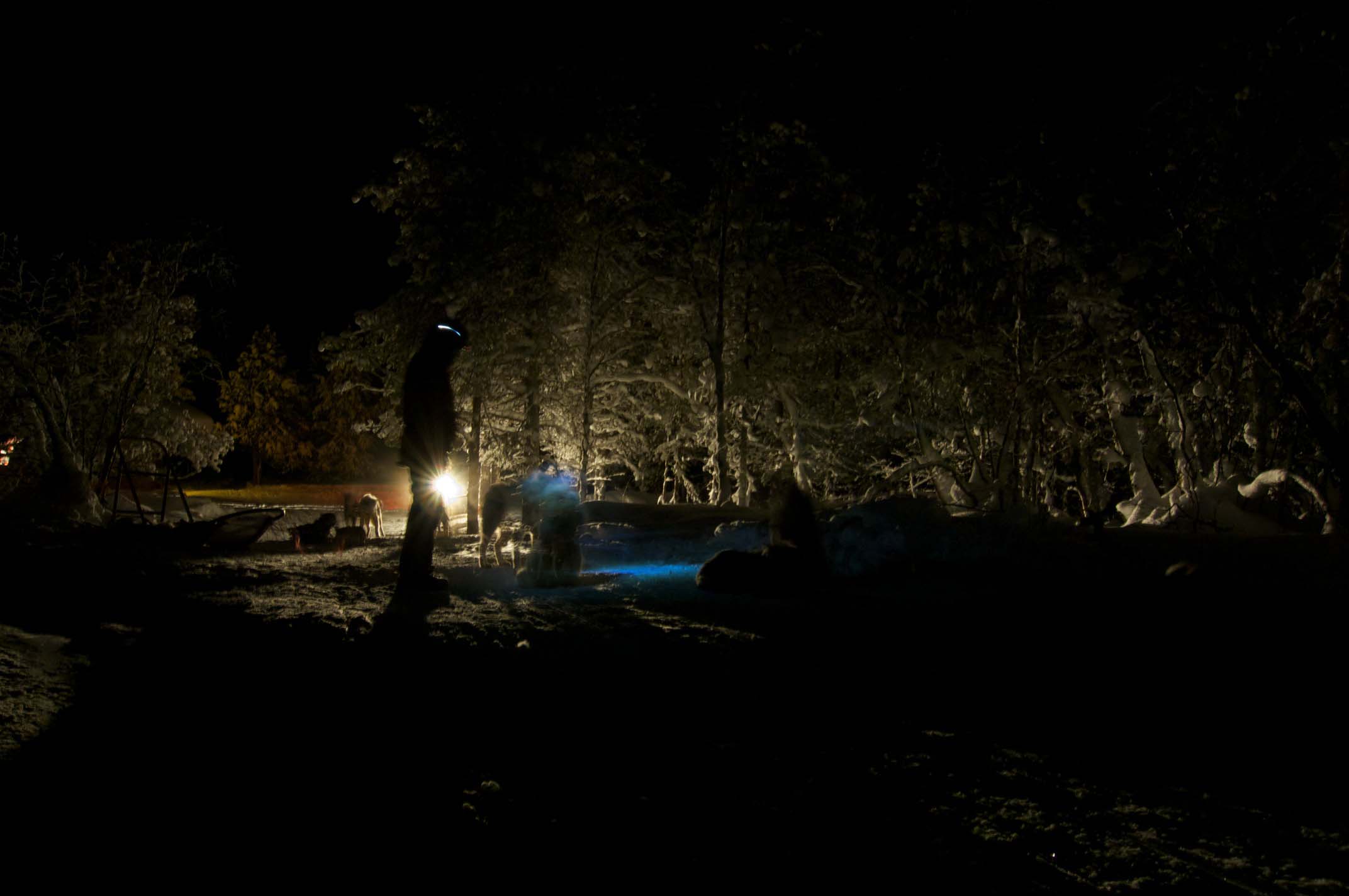
December is our crazy 'every safari under the sun, every day of the week' period. The yard fills with drive-in tourists who pop in with or without booking ahead (please book ahead!), so we can seldom find space for our own cars. We start most days around 6.30am and finish around midnight. This is also when British clients come to see Santa in Lapland for a day. Crazy as it sounds, the 8 or so days when we stand on a sleigh for up to 9 hours in temperatures down to -40C are, for many, the best of the year.
We may run 6 different safaris in a day and have 19 sleighs on the start line ready to head out at once. We are stretched to our limits completing all our standard tasks (dog kitchen clean, thrice-weekly heat checks, kennel and fence checks etc) alongside the full-on safari program.
January
In January we start offering longer tours as soon as we have opened, consolidated and marked the trails. It is a less hectic period for the guides, since the rush to prepare is always at the start of the day. The number of safaris per day reduces as we move from short tours with an ever-changing number of clients to longer tours with fewer clients. There is time to catch up on tasks like dog-check write-ups, and to enjoy the sun as it once more pokes its head above the horizon.
February-March
By February we are in the middle of what we call our multi-day client season although a group of shorter haired / older / younger dogs are still running the smaller tours. At this time we run up to three 2-day tours per week (which alternate between spending the nights in our farm kota or in our wilderness cabin at Palojoki) and either one 5-day or two 3-day safaris.
April
By the end of March the larger local client groups start to leave, so our short safaris reduce until only the longest tours and the occasional walk-in client remain. Our last client safari of the season is normally in the first week of May, but we keep training hard with the dogs until then - both to give the summer guides insight into what it is all about and to iron out any bad habits picked up during the season.
We are also planning what we can hope to achieve in the few short summer months before the whole thing rolls around again!