English
 Français
 Deutsch
 Suomi
Suomi Español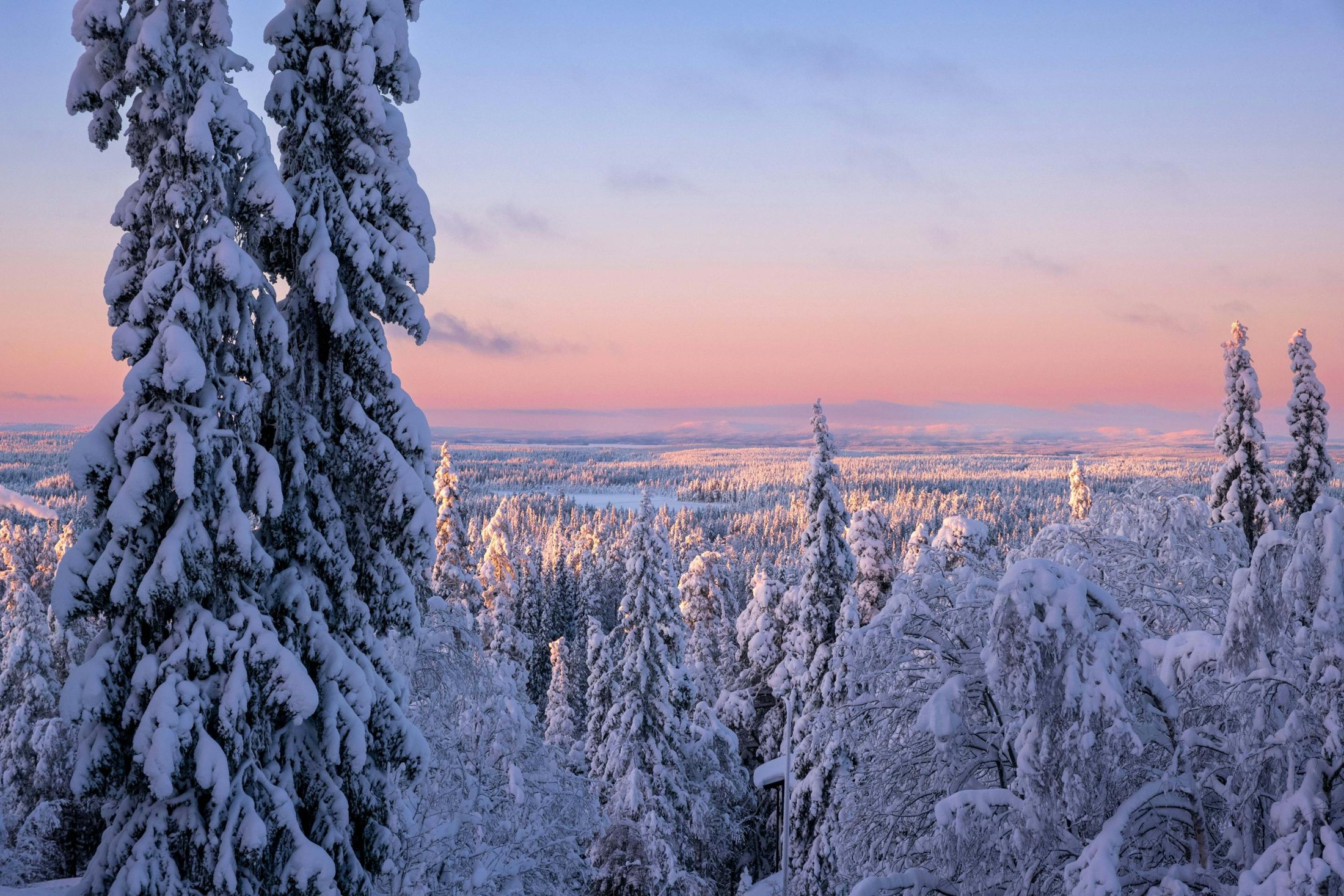
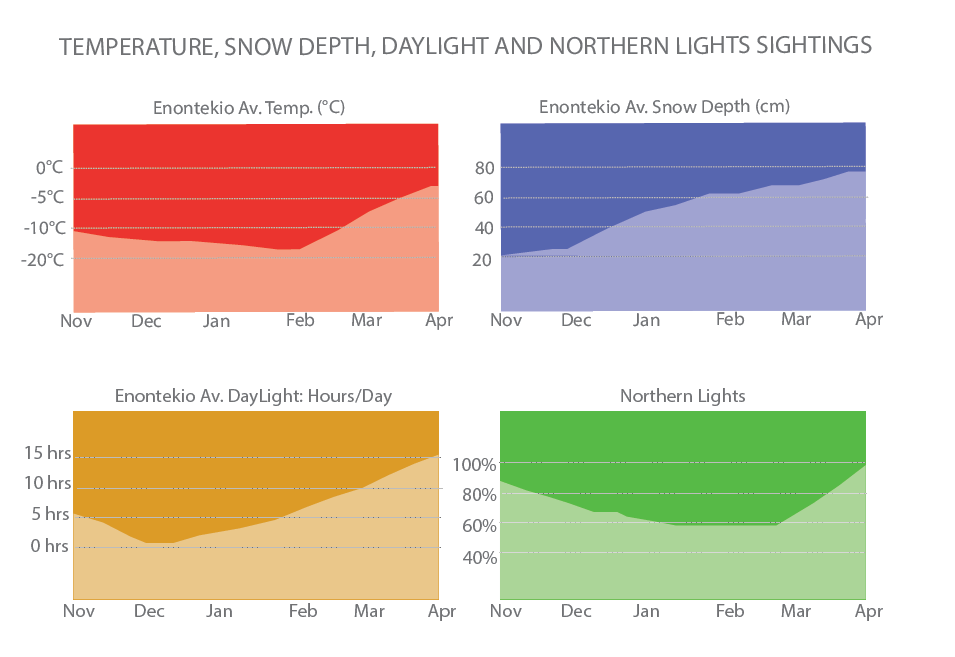
If you think of winter as being the months when there is snow on the ground and when temperatures are primarily below zero, then winter lasts, here, from November through until c. May. We can normally mush on snow throughout this period - although the beginning and end times vary from year to year and some years we are even happily sledding in October!
- Mushing season runs from November to c. May
- Short safaris bookable c. end November to end April; multiday safaris from c. 2nd week of January
- Polar night lasts c. 3-4 weeks, December 6th to January 6th
- Midnight sun 26th May to 18th July
- February temperatures can swing from +5C to -45C; even 30C in a single day
- Enontekiö has the lowest average temperatures in Finland
Booking windows
That said, we are hesitant to book safaris in the very early and very late season, as we would hate to have to cancel. We therefore take reservations for short safaris from c. end November to end April, and for longer multiday safaris only from c. the 2nd week of January - and even then, safaris at the 'outer limits' of each booking period remain subject to conditions and route availability.
Locals divide the Arctic winter into distinct phases: Early winter (c. end November to mid Jan); Mid-winter (c. mid Jan to end Feb); Early Spring (March - mid April); and Late Spring (mid April - end May). Conditions vary tremendously between them, with daylight ranging from zero in December to 14+ hours a day in spring.
Early winter and the polar night
Early winter spans the cross-over months of November and December. Some years the snow cover is well established by November, with daytime temperatures consistently below -10C and nights below -20C. Other years we get a week or more when temperatures hover around 0 and conditions turn icy and challenging for dog training. Northern lights can usually be seen surprisingly well at this time.
Our main client-season starts towards the end of November, but in November and December we focus on shorter one-day safaris, as many people visit in search of Father Christmas. December is also the period of 'perpetual / polar night', the darkest month of the year - so far north that in Enontekiö it lasts 3-4 weeks, from December 6th to January 6th (with the midnight sun from 26th May to 18th July).
FYI: 'within the Arctic Circle' technically means a place where, for at least one day, the sun neither rises nor sets. A common misconception is that this means total darkness, but it is in fact one of the most beautiful times of year. The trees are laden with snow that doesn't melt in the sun, and for c. 4-5 hours each day a magical twilight illuminates the landscape. You could be dog-sledding in December and not see the sun rise, then five months later be dog-sledding all night and not see it set!
Mid-winter into spring
By the end of December, conditions are generally good enough to have opened most of our longer routes. With the sun only just below the horizon, the snow reflects the refracted light in a fantastic array of blue-tinged hues. At this time Hetta hosts British Christmas charter packages and its unique Snow Castle is a popular attraction.
By January we have a little more time and the guides and dogs are fitter, better able to withstand the long days and cold. It is a beautiful month - branches still laden with snow and part of each day still lit by that ethereal refracted light.
By February the daylight is noticeably longer and the sun occasionally shines, even if temperatures can be some of the coldest of the winter. Daytime temperatures may swing between +5C and -45C, averaging around -15C - and the temperature can shift 30C within a single day, so guides often start out bitterly cold and gradually pull off layers. Enontekiö has the lowest average temperatures in Finland.
By March and April we are entering spring. The Arctic is fully laden with snow, the tracks are great, and the days are long, bright and often sunny, though short-lived snow storms are possible. By the end of April the sun only dips below the horizon for a few hours, so sunglasses are needed to prevent eye damage from sunlight reflecting off the vast fields of snow.
Arctic wildlife in winter
Reindeer are one of the few species to survive up here since they have oleic acid in their bone marrow which works as an anti-freeze. Lucky visitors may have a chance to see a reindeer gathering at some point between end December and mid January, since this is the time of year when they separate some for slaughter and vaccinate the rest. Willow grouse and ptarmigan are two of the six hardy bird species adapted to survive here, and you often come across these on the roads.