English
 Français
 Deutsch
 Suomi
Suomi Español
This Arctic region is one of the largest and most pristine wilderness areas in Europe. It is a reservoir of biological diversity, a place of great spiritual and historic interest and one of the most spectacular natural landscapes found on earth.
As a tourism company operating here, we have a huge responsibility not only to minimise the environmental footprint of our actions as much as possible but also to play a role in securing a sustainable future for the Arctic environment. One part of that involves communication with our clients as to the ways in which they can travel responsibly in Lapland.
- Everything, including dog waste from overnight camps, is carried back to base
- Around 70% of kennels bought from the Team Fix work-rehabilitation cooperative in Kiruna
- Leave No Trace Alliance partner since 2011
- Began Sustainable Tourism Finland accreditation in 2022
Setting a good example day by day
Day to day we operate in accordance with Enontekio municipality's environmental protection regulations, but more importantly we strive to set a good example through the best practices we drive in our business habits.
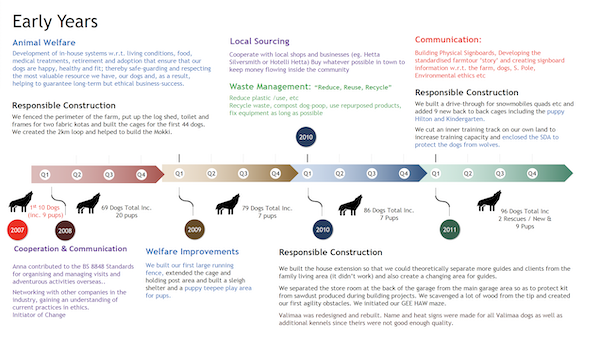
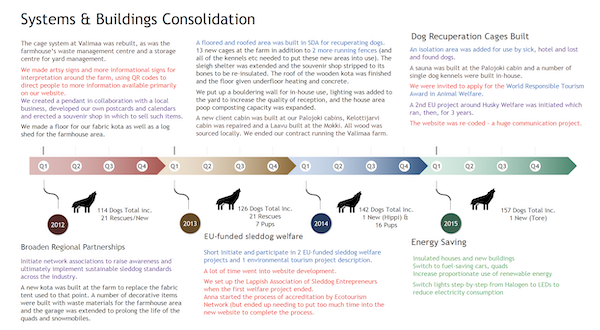
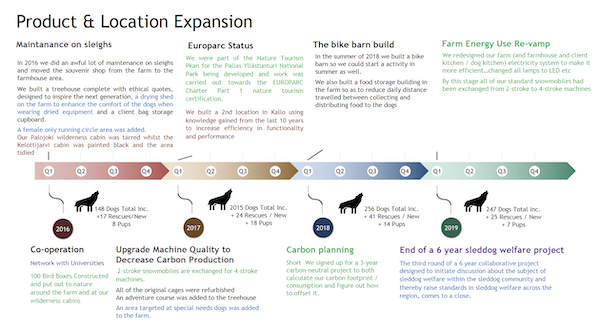
We use well-insulated building materials and choose durable over cheaper materials whenever we build, to consume fewer resources over time. All our dog cages are built as elements that can be reassembled elsewhere should we need to move them. We use energy- and water-saving devices and practices wherever possible (for example collecting rain water in barrels to clean floored cages) and monitor both. We use fires in the house and farm buildings to reduce energy consumption, with wood taken sustainably mostly from our own lands.
Reuse, recycling and local sourcing
We drive sound waste management in the office, on the farm and on wilderness safaris - everything, including the dog poop from overnight camps, is brought back to base. Sustainable sourcing matters to us, since short supply chains have a huge impact on global resource use. We buy reused or recycled products whenever possible and reuse and recycle our own paper and plastics.
Anna considers her 'dumpster diving' at the local landfill the ultimate in post-consumer recycling: salvaged timber has become agility obstacles and marsh boardwalks, extending the bike-accessible trail network around the farm. We buy around 70% of our kennels from Team Fix in Kiruna, a municipality-run social action programme providing work rehabilitation. We also minimise waste by buying meat and using left-over bones directly from local reindeer herders, and taking unsold products from the local shop and hotel as treats for the dogs.
Baselining and accreditation
We reduce environmental impact by continually reviewing and improving our activities as part of our social, environmental and ethical risk assessment process. We baselined our environmental standards with the help of an intern from Forum for the Future, and in 2011 became a partner of the Leave No Trace Alliance, committing to its 7 principles.
In 2019-20 we joined a pilot programme for Sustainable Tourism Finland as they developed their new sustainable tourism label, and began the accreditation process in 2022. Our documents set out STF Finland's 10 principles and how we align against them.