English
 Français
 Deutsch
 Suomi
Suomi Español
Which month is the best option for your safari? The character of a multi-day safari changes dramatically through the season – from the trail-blazing, expedition-mode weeks of mid-January through the frosty depths of February, the crystalising snow of March, and the long, accessible evenings of spring.
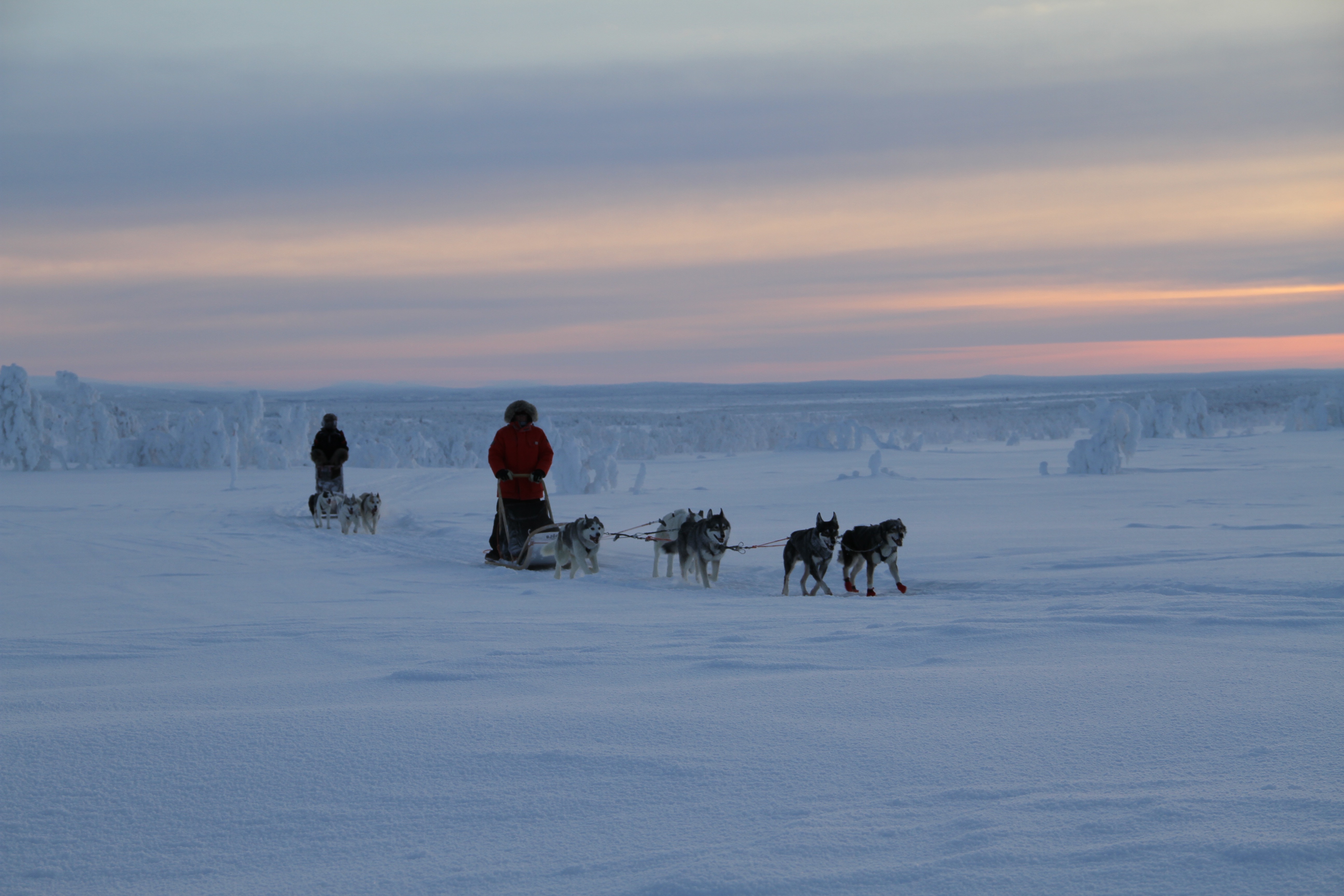
- Weeks 3-5 (mid-late Jan): full-on expedition mode, trail-blazing, some sledding in the dark
- Weeks 6-9 (February): long cold days, often the coldest weeks, picture-postcard frosted trees
- Weeks 10-12 (March): solidifying trails, lighter days, possible sporadic snowstorms
- Weeks 13-16 (late March/April): safest, most accessible time; best for families, older or younger clients
- Early-season and February dates not recommended for anyone with compromised circulation
Early Winter 'Trail Blazing' Dates – Weeks 3-5: Mid-Jan to end-Jan
Come at this time and be ready for long days and tough conditions, including some sledding in the dark, with clients very likely to work hard helping the dogs on the hills. Trails should be marked for others by the start of February and ease off after that, but until then we are making our own tracks each week, with little time in the evenings to relax. This is full-on expedition mode: you need to be tough and fit enough not just to survive but to enjoy the challenge.
At this time of year, multiday safaris are not recommended for anyone with compromised circulation because of the potential for extreme cold.
The Frosty Depths of the Arctic Winter – Weeks 6-9: February
This is the time of long cold days and very variable trails. Sledding can still be very physical, particularly since the coldest weeks are often in February, so this should still be considered full-on arctic mode. You may be lucky and catch the picture-postcard arctic with snow frosted on the trees, but at some point in February the sun and wind usually dislodge it, leaving the landscape looking more barren.
Start times need not be quite as early as at the start of the season, but we still time the days to maximise light on the trails. As in early winter, multiday safaris at this time are not recommended for anyone with compromised circulation (diabetes, heart conditions etc) because of the potential for extreme cold.
Spring Beckons: Crystalising Snow & Solidifying Trails – Weeks 10-12: March
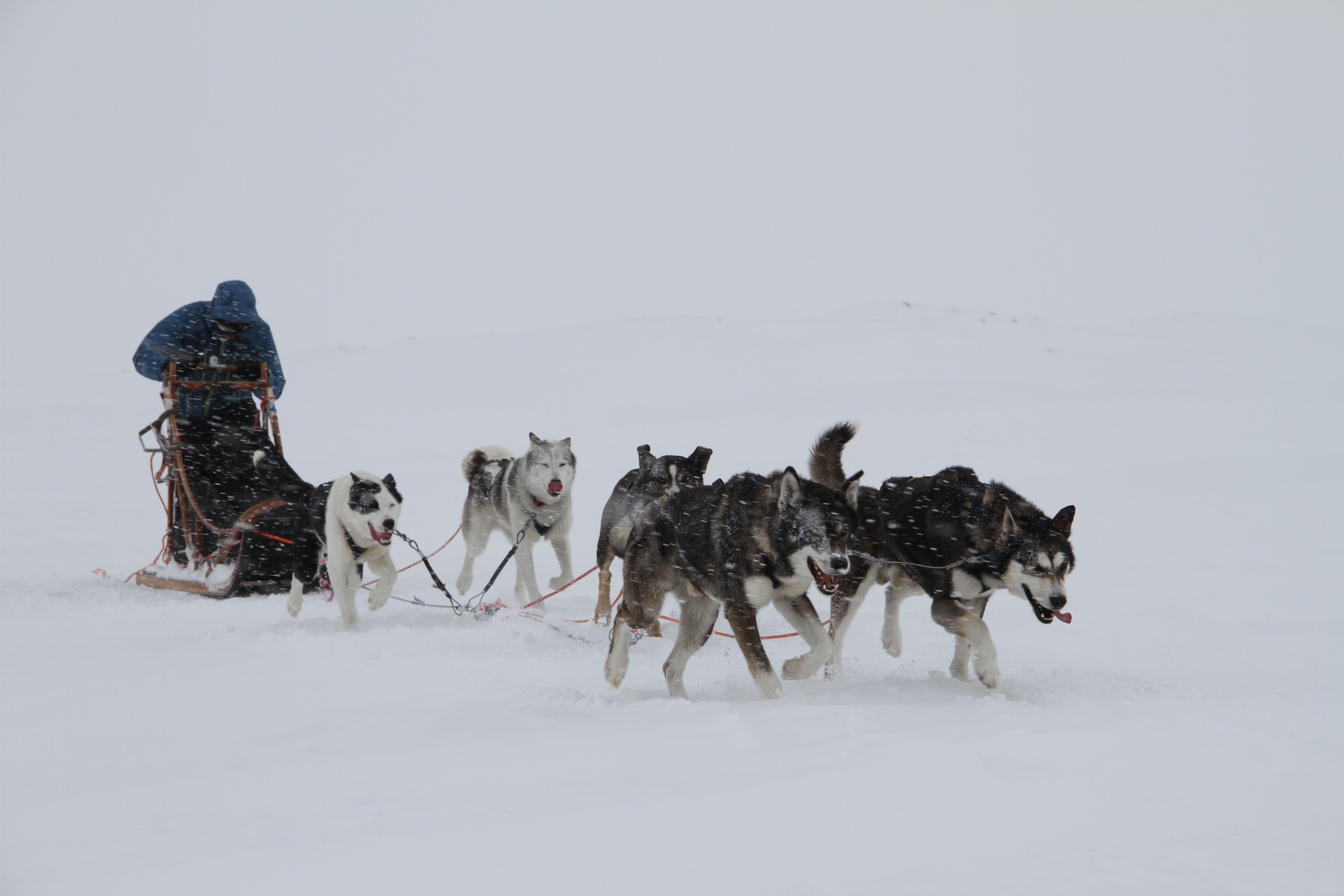
Conditions are hard to predict, since winter does not give up its hold on the arctic easily. More local people are heading out onto the trails, helping them to solidify underfoot, but sporadic snowstorms are not uncommon and can still make progress incredibly challenging for both you and the dogs.
That said, with spring around the corner extreme cold is less likely to be your constant companion, and a normal tour starts to feel a little less demanding than earlier in the season. The increased daylight means more chance to enjoy the dogs in the evenings at the cabins, and to feel you might actually have time to relax.
When Spring Truly Awakens – Weeks 13-16: last week March and April
This is the time to visit if you want your dog-sledding holiday to be just that - an enjoyable but challenging outdoor holiday, rather than a potentially extreme and exhausting expedition.
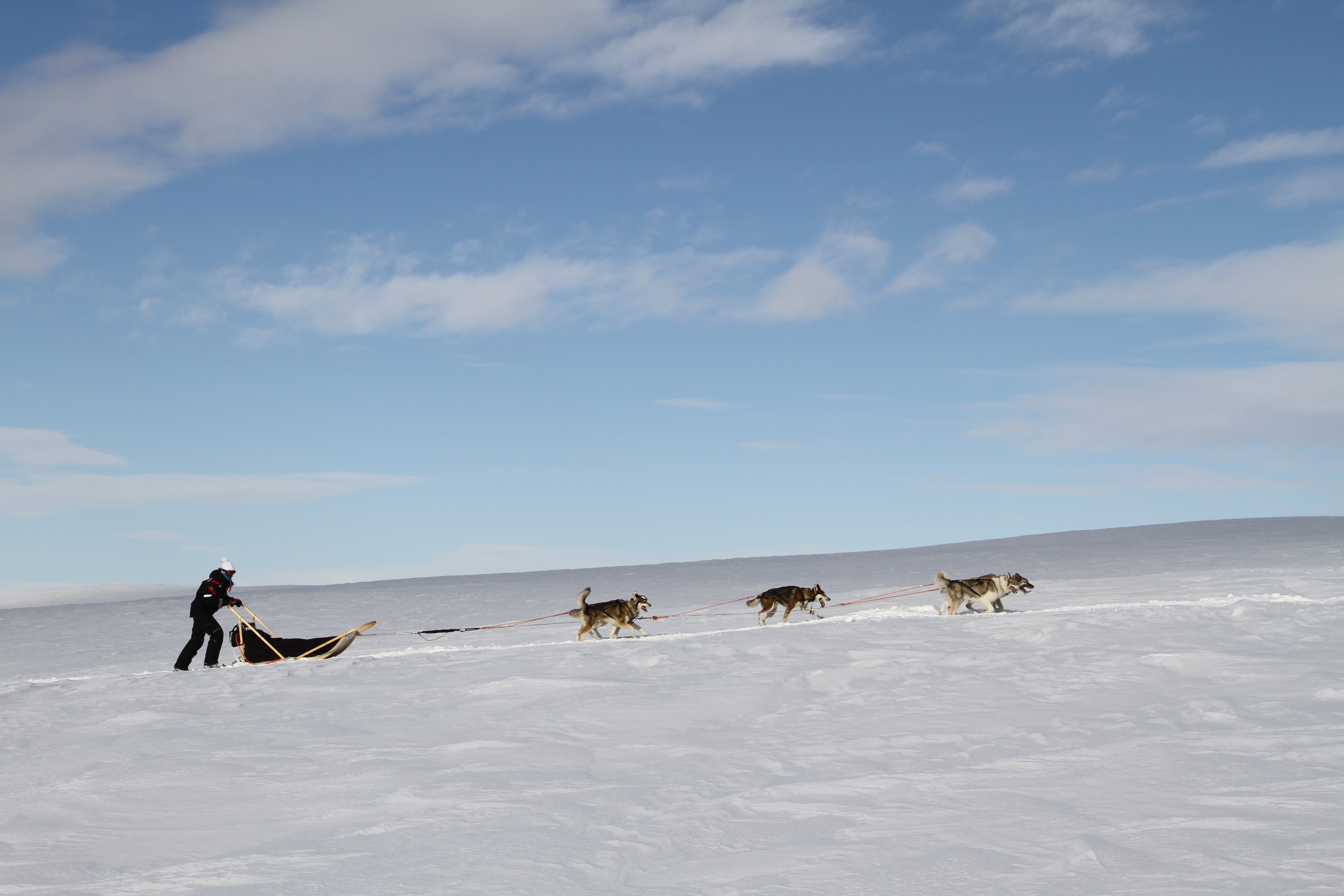
For a few short weeks in spring the landscape becomes truly accessible: you can walk off-track and explore around the cabins in the long evenings. The only downside is that it can be a bit icy at times. This is the safest time of year for arctic dog sledding, so it is when older and younger clients, and anyone at higher risk from extreme cold linked to compromised circulation, should visit. We also have more capacity for private or customised tours, making it a great time for families.